Overview
Nattergal, named after the Danish word for nightingale, was founded in 2021 to answer a blunt question: can nature recovery be a business rather than a cause? It buys tired agricultural land, restores functioning ecosystems and sells the resulting carbon and biodiversity outcomes.
The team draws on the experience of Knepp in West Sussex, and applies it to lowland England at a scale that donations alone would struggle to reach.
The Wildlands
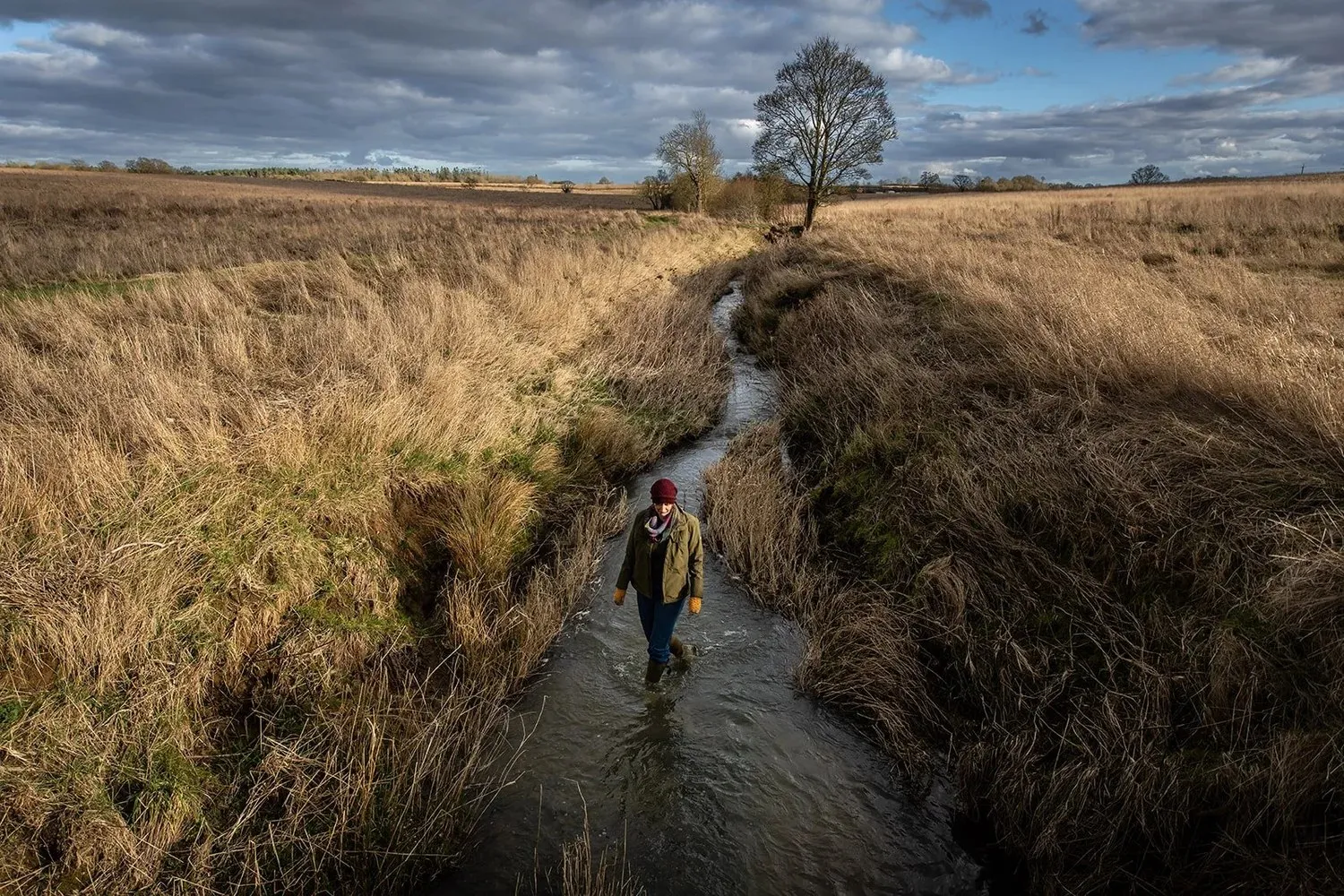
Boothby Wildland, near Grantham in Lincolnshire, is the first and largest: 617 hectares of former arable farm on variable Grade 3 soils, bought in December 2021. Restoration started in 2022 and includes returning the straightened West Glen River to a natural course, with beavers now helping.
High Fen Wildland in Norfolk is the second site, 292 hectares of deep peaty fen grassland that was farmed for arable and daffodils until 2007. Wet, difficult land of this kind is exactly where natural processes can move fastest.
Harold's Park Wildland at Nazeing in Essex is the third site, around 206 hectares bought from the Church of England's investment trustee. Low grade arable, intensive grassland and old Christmas tree plantations are being turned back into wood pasture, on land King Harold is said to have hunted a thousand years ago.
Nature as an Investable Asset
Nattergal's stated purpose is to make nature a global investable asset class. In practice that means buying land at agricultural value, restoring it, and generating revenue from carbon sequestration, biodiversity net gain units, nutrient neutrality and, in time, visitors and wild produce.
It is a contested model, and worth understanding rather than dismissing. If it works it unlocks private money at a scale no charity can match. If the measurement is weak, it risks becoming an expensive way of doing very little.
Results So Far
The Boothby Wildland Impact Report covering 2022 to 2025 records biodiversity up 108% since 2023, with recovering signs from birds including grey partridge and skylark, and beavers established on the river. Publishing that detail, including the awkward parts, is how this model earns trust.
How to Get Involved
Boothby Wildland has open days, trails and volunteering, and Nattergal works with landowners, corporate buyers and investors. Details are at nattergal.com.
Further Resources
Watch
Who is Nattergal?
The Nattergal team explain why the company was set up and what it is trying to prove.
Learn More
Nattergal
NattergalOfficial site covering the company, its sites and its natural capital approach.
Boothby Wildland Impact Report 2022 to 2025
NattergalPublished monitoring data on biodiversity, species recovery and beavers at Boothby.
Boothby Wildland rewilding project
Rewilding BritainIndependent project profile with location, area and habitat detail.
Frequently Asked Questions
What is Nattergal?
Nattergal is a UK company founded in 2021 that buys degraded land and restores functioning ecosystems at landscape scale, funding the work through natural capital markets such as carbon and biodiversity units. It was set up by people closely associated with Knepp, and is registered in England with its office in Norwich.
What is Boothby Wildland?
Boothby Wildland is Nattergal's first site: a 617 hectare former arable farm near Grantham in Lincolnshire, bought in December 2021. Restoration began in 2022 and includes re-wiggling the West Glen River, with beavers now on site.
Has biodiversity actually increased at Boothby?
Nattergal's Boothby Wildland Impact Report 2022 to 2025 reports biodiversity up 108% since 2023, with signs of recovery in species including grey partridge and skylark, alongside the arrival of beavers.
Is rewilding for profit a good idea?
It divides opinion. Supporters argue that private capital can restore land far faster than grants and donations alone, and that verified carbon and biodiversity units make it repeatable. Critics worry about land prices, green claims and who ultimately benefits. Nattergal's response is to publish detailed monitoring so its results can be checked.
Continue Reading
Stay Updated on Rewilding
Join our newsletter for the latest rewilding news, guides, and updates from The Grange Project.