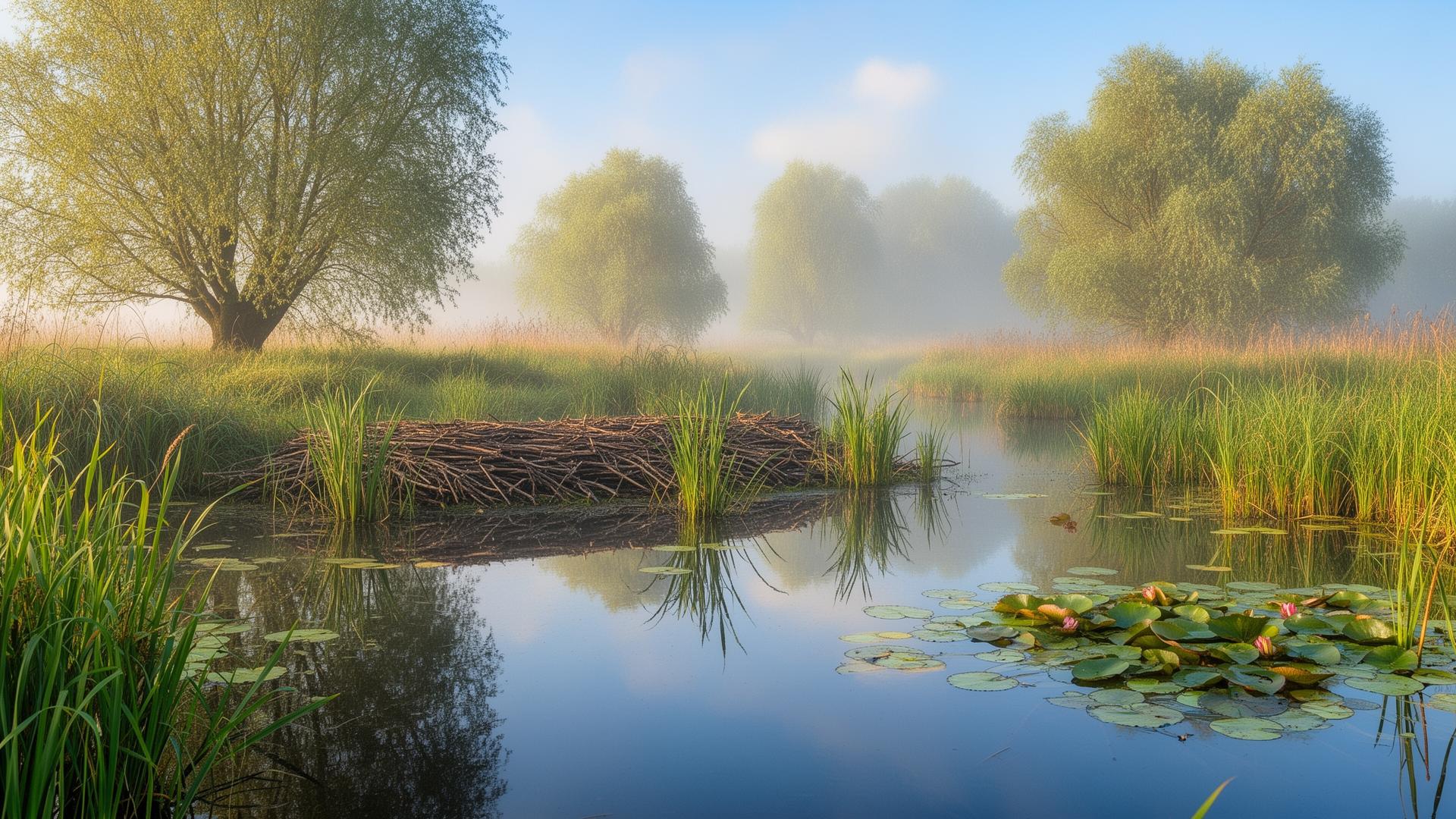
Water is life—and Britain's wetlands and rivers once teemed with it. From vast fens to meandering floodplains, these "blue habitats" supported extraordinary wildlife and provided natural services we're only now learning to appreciate: flood prevention, water purification, and carbon storage.
We've lost 90% of our wetlands. Our rivers have been straightened, dredged, and polluted. But now, a blue revolution is underway. With beavers leading the charge, wetlands and rivers are being restored across Britain—with remarkable results.
Britain's Lost Wetlands
Before drainage, much of lowland Britain was wetland. The Somerset Levels, the Fens of East Anglia, the Lancashire mosses—vast areas of marsh, bog, and floodplain that supported enormous numbers of wildfowl, fish, and invertebrates. Rivers meandered freely across floodplains, creating mosaics of pools, channels, and wet meadows.
Then came the engineers. From the 17th century onwards, wetlands were drained for agriculture. Rivers were straightened to speed water to the sea. Floodplains were disconnected by embankments. By the late 20th century, we'd lost an estimated 90% of our wetlands.
The Hidden Cost
We now understand what we lost: natural flood management, water purification, carbon storage, and habitat for species from cranes to water voles. Drained peatlands emit greenhouse gases. Straightened rivers flood faster and harder downstream. Pollutants that wetlands would have filtered pour into our waterways.
Types of Wetland Habitat
Floodplain Wetlands
Where rivers naturally spill onto surrounding land during floods. These seasonally flooded areas support breeding waders, amphibians, and flood-adapted plants. Most have been disconnected from their rivers by embankments.
Reedbeds
Dense stands of common reed in shallow water, supporting bitterns, marsh harriers, bearded tits, and rare invertebrates. Britain has only around 7,000 hectares of reedbed—half what we need for dependent species.
Fens
Alkaline wetlands fed by mineral-rich groundwater. Support distinctive plant communities including rare orchids, sedges, and carnivorous plants. The Fens of East Anglia were once vast; fragments remain at sites like Wicken Fen.
Rivers & Streams
Natural rivers have riffles, pools, meanders, and woody debris. They support salmon, trout, otters, kingfishers, and countless invertebrates. Most have been straightened and simplified.
Ponds
Small bodies of standing water, once common in farmland. Support amphibians, dragonflies, and aquatic plants. Britain has lost 50% of its ponds since 1900.
Coastal Wetlands
Salt marshes, estuaries, and coastal lagoons. Support huge numbers of wading birds and wildfowl, and buffer coasts against storms. Under pressure from sea level rise and coastal squeeze.
Wetland Wildlife
Wetlands punch far above their weight for biodiversity. Though covering a small fraction of Britain's land area, they support a disproportionate share of our wildlife:
Birds
- Bittern – the iconic "boom" of reedbeds, brought back from near-extinction
- Marsh harrier – Britain's reedbed raptor, now recovering
- Crane – returning to breed in eastern wetlands
- Kingfisher – dazzling river bird dependent on good water quality
- Curlew – Europe's most threatened bird, needs wet meadows
- Snipe, lapwing, redshank – waders needing wet grassland
Mammals
- Otter – recovered across Britain thanks to cleaner rivers
- Water vole – Britain's fastest-declining mammal, needs healthy banks
- Beaver – returned and transforming waterways
- Water shrew – venomous hunter of aquatic invertebrates
Other Wildlife
- Dragonflies and damselflies – 46 UK species, all wetland-dependent
- Great crested newt – protected species needing ponds
- Salmon and trout – migratory fish needing clean rivers
- White-clawed crayfish – Britain's only native crayfish, now rare
- Aquatic plants – water lilies, pondweeds, and rarities like floating water plantain
The Beaver Effect
No single intervention restores wetlands as effectively as beaver reintroduction. These "ecosystem engineers" create wetland habitat as a by-product of their daily activities:
Dam Building
Beaver dams create pools that raise water tables, flood adjacent land, and slow water flow. A single family can build multiple dams, transforming hundreds of metres of waterway into complex wetland.
Flood Reduction
Studies show beaver dams reduce flood peaks by up to 30%. Water is stored upstream during heavy rain and released slowly afterwards—exactly what natural flood management aims to achieve.
Water Quality
Beaver ponds trap sediment and allow pollutants to settle. Water downstream of beaver dams is measurably cleaner, with reduced phosphates and nitrates.
Biodiversity Boost
Research shows 33% more fish in beaver territories, dramatic increases in amphibians, and new habitat for everything from dragonflies to water voles.
With beavers now legally protected and expanding across England and Scotland, their wetland-creating abilities are being harnessed for restoration projects nationwide.
Wetland Restoration
Across Britain, wetlands and rivers are being restored at an unprecedented scale:
River Re-meandering
Straightened rivers are being given back their curves. By removing bank reinforcement and lowering floodplain defences, rivers can reconnect with their natural floodplains. The River Cole in Wiltshire and River Quaggy in London are celebrated examples.
Floodplain Reconnection
Projects like the Great Fen, Wicken Fen Vision, and the Humberhead Peatlands are returning farmland to wetland on a landscape scale. These ambitious schemes aim to create vast new wetland corridors over decades.
Reedbed Creation
New reedbeds are being created for bitterns and other reedbed species. The RSPB's Lakenheath Fen, created from farmland since 1995, now supports breeding cranes and the UK's first breeding pair of great white egrets.
Beaver Reintroduction
Licensed beaver releases are creating wetlands across the country. From Cornwall to Yorkshire, enclosed beaver projects demonstrate the habitat they can create. Wild populations are expanding in Devon and Scotland.
Natural Flood Management
Wetland restoration is increasingly funded as "natural flood management." By storing water upstream and slowing its flow, restored wetlands protect downstream communities from flooding while delivering wildlife benefits. It's a win-win approach that's gaining traction with government and water companies.
Where to Visit
Experience restored wetlands and see what these habitats can become:
WWT Wetland Centres
Nine centres across the UK including Slimbridge (Gloucestershire), Martin Mere (Lancashire), and London Wetland Centre. All offer excellent facilities and guided experiences.
RSPB Lakenheath Fen
Former farmland transformed into reedbed and wet grassland in Suffolk. Breeding cranes, bitterns, and marsh harriers. A showcase of what's possible.
Wicken Fen, Cambridgeshire
Britain's oldest nature reserve and heart of a 100-year vision to restore the Fens. Traditional fen habitat with konik ponies and Highland cattle grazing.
River Otter, Devon
See wild beavers and the wetlands they've created. Guided walks available from Devon Wildlife Trust. England's flagship wild beaver population.
Explore Wetland Restoration
At the Grange Project, we're restoring wetland habitats. Stay with us to see newly established ponds and scrapes, and the effect of leaky woody debris installations.
Further Resources
Watch
England's First Wild Beaver Release | Devon Wildlife Trust
Following the licensed release of wild beavers and their impact on the River Otter.
What Happens When You Set a River Free? | BBC News
Exploring river restoration and the benefits of allowing rivers to rewild.
Frequently Asked Questions
Why are wetlands important for wildlife?
Wetlands are among the most productive ecosystems on Earth. They provide breeding habitat for amphibians, nesting sites for waterbirds, hunting grounds for otters and kingfishers, and nurseries for fish. The variety of conditions, from open water to reed beds to wet meadows, supports an extraordinary diversity of species, many of which are found nowhere else.
How much wetland has Britain lost?
Britain has lost approximately 90% of its wetlands since the start of the Industrial Revolution. Drainage for agriculture, urban development, and water extraction have reduced wetlands to a fraction of their former extent. The Somerset Levels, Fens, and many coastal marshes were once vast wetland systems; most are now intensively farmed.
How do wetlands help with flooding?
Wetlands act as natural sponges, absorbing water during heavy rain and releasing it slowly. Floodplain wetlands can store millions of litres during floods, protecting downstream communities. The 2014 Somerset floods demonstrated what happens when wetlands are drained and rivers straightened—water rushes through rather than being held in the landscape.
What role do beavers play in wetland creation?
Beavers are nature's wetland engineers. Their dams create pools, raise water tables, and flood adjacent land. A single beaver family can transform kilometres of river into complex wetland habitat. Studies show beaver wetlands support 33% more fish, dramatically more amphibians, and dozens of new species. They're one of the most effective ways to restore wetland habitat.
How can rivers be rewilded?
River rewilding involves restoring natural processes: removing artificial bank reinforcement to allow meandering, reconnecting floodplains, reintroducing beavers, allowing woody debris to remain, and planting riparian trees for shade and bank stability. Natural rivers are slower, more complex, and far more biodiverse than straightened, canalised channels.
Continue Reading
Stay Updated on Rewilding
Join our newsletter for the latest rewilding news, guides, and updates from The Grange Project.