Overview
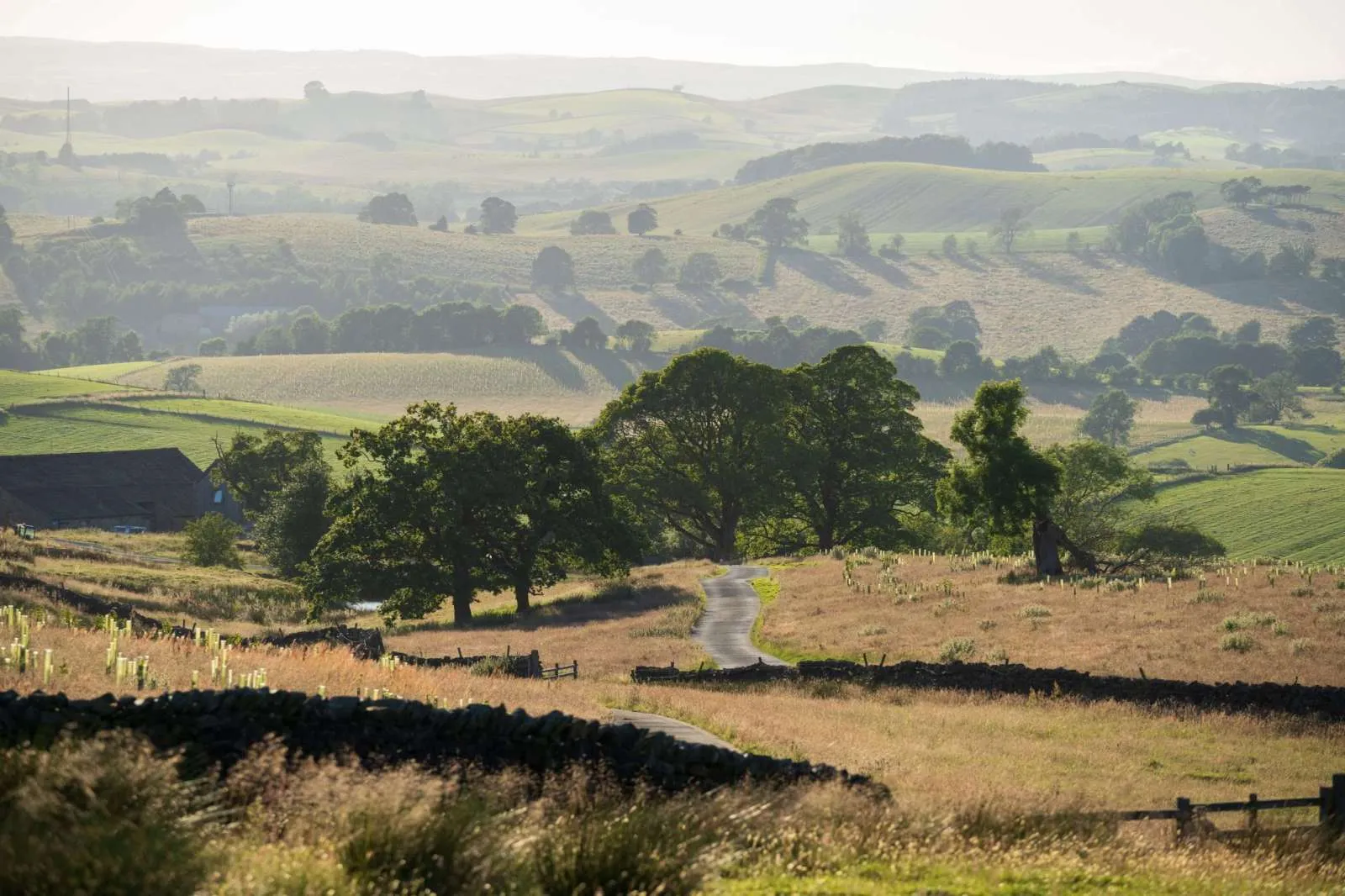
Broughton Sanctuary sits on the edge of the Yorkshire Dales near Skipton. For centuries the estate was managed as productive farmland. Since 2021 it has been running one of the larger private nature recovery programmes in England, restoring around 2,500 acres of it.
What makes Broughton unusual is that ecological restoration sits alongside a wellbeing, retreat and events business. The estate frames the two as the same project: repairing the land and repairing people's relationship with it.
The Nature Recovery Programme
The programme began in earnest in December 2020, when 15 native tree species went into more than 1,000 acres of former grazing land. That has grown to roughly 330,000 trees, planted as new woodland, scrub edge and open wood pasture rather than dense blocks.
Alongside planting, the estate has been rewetting drained ground, restoring ponds and watercourses, and reducing grazing pressure so that grassland can develop structure. Beavers have been reintroduced into an enclosure to do the wetland engineering that machinery cannot.
Results So Far
Volunteer surveyors have now recorded roughly 1,750 species across the estate, from fungi and invertebrates to birds and mammals. Monitoring on this scale matters: without it, claims about recovery are just impressions.
The estate publishes its own State of Nature Recovery reporting, setting out habitat creation, carbon and species data year by year. That transparency makes Broughton a useful reference point for other landowners weighing up a similar change of direction.
Funding the Work
Planting has been supported by the White Rose Forest through the government-funded Trees for Climate programme. The estate has also worked with natural capital investors and consultants on carbon and biodiversity outcomes, which has drawn national coverage and some debate.
Visitor income from retreats, holiday accommodation, weddings and events forms a third strand. It is the same logic behind our own cabins: hospitality can pay for habitat.
Visiting & Supporting Broughton Sanctuary
The estate offers walking trails, self-guided routes, guided nature walks, volunteering days, retreats and accommodation. Details are at broughtonsanctuary.co.uk.
Further Resources
Watch
Rewilding Broughton
The estate's own film on the thinking behind its nature recovery programme.
Learn More
Nature Recovery at Broughton Sanctuary
Broughton SanctuaryThe official programme page, covering the 2,500 acre vision, habitats and FAQs.
State of Nature Recovery report
Broughton SanctuaryThe estate's own progress report on habitat creation, monitoring and species records.
Rewilding project brings species back to estate
BBC NewsCoverage of the roughly 1,750 species recorded by volunteers at Broughton.
Frequently Asked Questions
What is the Broughton Sanctuary Nature Recovery Programme?
It is a 2,500 acre (roughly 1,030 hectare) restoration project on the Broughton estate near Skipton in North Yorkshire. Since 2021 the estate has been converting intensively managed farmland into a mosaic of new native woodland, wood pasture, species-rich grassland and restored wetland, alongside a wellbeing and events business that helps fund the work.
How many trees have been planted at Broughton Sanctuary?
Around 330,000 native trees have been planted since the programme began, with the first large planting of 15 native species across more than 1,000 acres in December 2020. The work is supported by the White Rose Forest through the government-funded Trees for Climate programme.
What wildlife has returned to Broughton Sanctuary?
Volunteer surveyors have recorded roughly 1,750 species on the estate. Beavers have been reintroduced into an enclosure, wetlands have been restored, and monitoring has picked up recovering populations of birds, invertebrates and fungi across the newly planted and rewetted ground.
Can you visit Broughton Sanctuary?
Yes. The estate is open to visitors through walking trails, self-guided routes, guided nature walks, retreats, holiday accommodation and events. Visitor income is part of how the nature recovery programme is paid for, alongside grant funding and natural capital investment.
Continue Reading
Stay Updated on Rewilding
Join our newsletter for the latest rewilding news, guides, and updates from The Grange Project.