Part of the Top Rewilding Projects UK Series
Wilder England
Our Top Five Rewilding Sites
Written by Tom & Chloe, Grange Project founders
England may be one of the most intensively farmed countries in Europe, but it also hosts some of the most visionary rewilding projects in the UK. As we explore the incredible sites below, remember that each is part of a wider movement to give at least 30% of Britain's land and sea back to nature.
From the chalk streams of Norfolk to the ancient wood pasture of West Sussex, these projects prove that we can restore wildlife, lock up carbon and boost rural economies all at once. Here are five trailblazing English rewilding projects that inspire us at the Grange Project.
 © Knepp Estate
Knepp Castle Estate
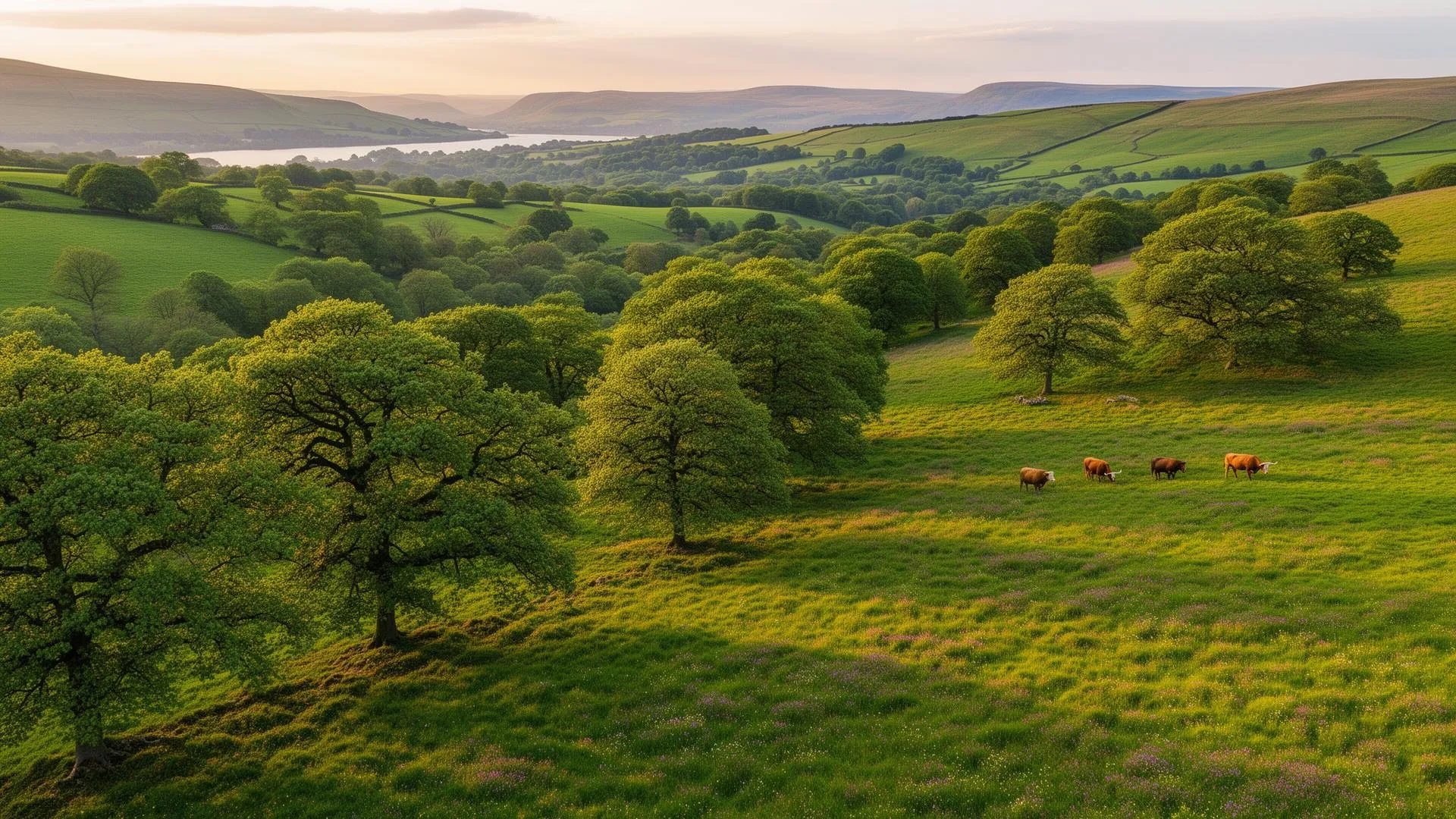
Once an intensively farmed estate, Knepp is now the poster-child for lowland rewilding. In 2001 landowners Charlie Burrell and Isabella Tree let their heavy clay soils revert to scrub and wood pasture. Free-roaming cattle, ponies, pigs and deer mimic the grazing patterns of ancient herbivores, creating a patchwork of grassland, scrub and woodland. The results are jaw-dropping: turtle doves, nightingales and purple emperor butterflies now breed on the estate and species once confined to reserves spill into the surrounding countryside. Knepp also shows that nature can pay its way: the estate now runs profitable safaris, glamping, meat and timber enterprises.
Highlights
- Free-roaming cattle, ponies, pigs and deer
- Turtle doves, nightingales and purple emperor butterflies breeding
- Profitable safaris, glamping, meat and timber enterprises
- Inspired the 200 km Weald-to-Waves corridor
Key Species
Why It Matters
Knepp demonstrates that large-scale ecological restoration can work on poor-quality farmland and that rewilding can create economic resilience. Its success has inspired the wider Weald-to-Waves corridor, encouraging neighbouring farmers to join a 200 km wildlife corridor across Sussex.
Useful Resources
Knepp Rewilded - A Short Film
15-minute film about the trailblazing Knepp rewilding project and wildlife successes
Watch NowKnepp Wilding Podcast
Conversations with scientists and farmers about the project and wider nature recovery
Listen Now © Wild Ken Hill
Wild Ken Hill
We've long admired Wild Ken Hill from afar – its 'three-pronged' approach to land management has become a blueprint we return to again and again. Situated on the edge of The Wash, the estate blends rewilding, regenerative agriculture and traditional conservation. From 2019 they stopped cultivating 1,000 acres of poor farmland and allowed natural regeneration to take over. Red Poll cattle, Tamworth pigs and Exmoor ponies now wander the rewilding zone while beavers engineer wetlands in an enclosure.
Highlights
- Three-pronged model: rewilding, regenerative farming and conservation
- Plant species roughly doubled within three years
- Beavers engineering wetlands in an enclosure
- Scrub and tree species naturally regenerating
Key Species
Why It Matters
What inspires us most about Wild Ken Hill is how it proves that food production and wildlife recovery can coexist. Their mosaic approach helps tackle climate change, improves air and water quality and offers rural employment. Baseline surveys show the average number of plant species has roughly doubled within just three years – a reminder of how quickly nature can bounce back when given the chance.
Useful Resources
The Remarkable Nature Comeback of Wild Ken Hill
Explore how bold nature restoration meets innovative regenerative farming at Wild Ken Hill
Watch NowRewilding at Wild Ken Hill
Sean's Wild Life episode explaining the estate's three-pronged approach
Listen Now © Wild Ennerdale
Wild Ennerdale
Wild Ennerdale is a project we dream of visiting one day. Tucked away in the far west of the Lake District, it's Britain's longest-running landscape-scale rewilding partnership. In 2003 the three main landowners (Forestry England, the National Trust and United Utilities) agreed to let natural processes shape the valley. Sheep numbers were drastically reduced and Galloway cattle introduced; Sitka spruce plantations are being replaced with native broadleaf trees.
Highlights
- Britain's longest-running landscape-scale rewilding partnership
- Over 100,000 trees planted for woodland regeneration
- Sitka spruce replaced with native broadleaf trees
- Rivers and valley mires being restored
Key Species
Why It Matters
What draws us to Wild Ennerdale is the collaborative spirit: three landowners with different priorities coming together for nature. Its minimalist approach of 'letting nature decide' offers a model we try to follow at the Grange Project. The project's plans to reintroduce beavers and pine martens give us hope for what's possible across Britain's uplands.
Useful Resources
Wild Ennerdale - Nature
Sharing the Ennerdale valley's special nature, wildlife and restoration work
Watch NowCan we even 'rewild' in the UK?!
Wilder Podcast episode featuring a guest who advises both Wild Ennerdale and Rewilding Britain
Listen on Wilder Podcast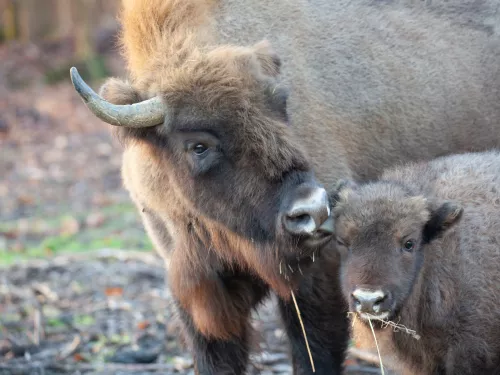 © Donovan Wright / Kent Wildlife Trust
Wilder Blean
The return of European bison to Britain captivates us. Though we haven't yet made the journey to Kent, Wilder Blean represents the kind of bold, imaginative rewilding that excites us most. Kent Wildlife Trust and Wildwood Trust have enclosed parts of Blean and Thornden woods – one of Britain's largest ancient woodlands – to reintroduce a small herd of these magnificent 'ecosystem engineers'. The bison tear down trees, trample bracken and create glades, mimicking woodland dynamics lost for thousands of years.
Highlights
- First European bison reintroduction to Britain in thousands of years
- Comparing impacts of bison vs cattle, ponies and pigs
- Restoring ponds and leaky dams
- £100,000 from Rewilding Challenge Fund in 2023
Key Species
Why It Matters
What fascinates us about Wilder Blean is the ambition to bring back a keystone species after millennia. The project will provide unique data on how different grazers shape ancient woodland – insights that could inform our own approach. Beyond wildlife benefits, their vision for guided safaris, educational visits and new jobs offers a nature-based enterprise model we hope to learn from.
Useful Resources
Wilder Blean Bison - A Tour from Ranger Heidi
Bison Ranger Heidi gives a tour of the Blean, showing two years of bison activity
Watch NowBison Whisperers: The Return of the Native
Trees A Crowd episode about the Wilder Blean bison project
Listen Now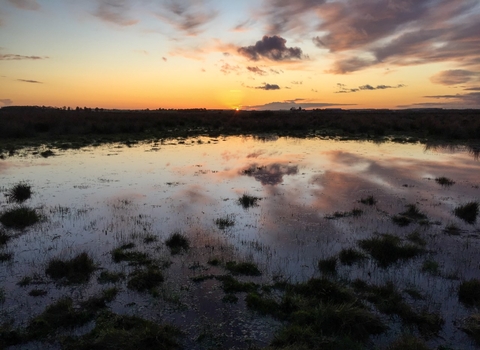 © Martin Parsons / Wildlife Trust BCN
The Great Fen
The Great Fen has been on our 'must visit' list for years. Once part of Britain's largest wilderness, the East Anglian fens were drained for agriculture, leaving tiny fragments of ancient peatland. Since 2001 a coalition of five organisations has been working to reconnect the National Nature Reserves of Woodwalton and Holme Fens, creating a 14-square-mile wetland landscape. Arable fields are being rewetted, clay banks hold back water and new farming techniques like paludiculture are being trialled.
Highlights
- One of Europe's largest peatland restoration schemes
- 50-year project reconnecting two National Nature Reserves
- Trialling paludiculture (wet farming) across 120 hectares
- Reduces CO₂ emissions from 39 to less than 1 tonne per hectare
Key Species
Why It Matters
What inspires us about The Great Fen is the vision – a 50-year project to restore one of Europe's largest peatland landscapes. Their work on wet farming (paludiculture) is pioneering a new economy that could benefit rewilders everywhere. The carbon story alone is remarkable: converting drained peatland to rewetted fen reduces emissions from 39 tonnes to less than one tonne of CO₂ per hectare. It's a project that shows how nature recovery and climate action go hand in hand.
Useful Resources
The Great Fen - Exploring a Unique Landscape
Explore the Great Fen's trails, rivers, woodland and restoration work
Watch NowWildlife of the Great Fen with Henry
In Conservation Podcast Episode 10 with Sophie Baker and Henry Stanier
Listen NowWhat's Next?
Rewilding in England is no longer a fringe experiment. From beavers engineering wetlands in Norfolk and Kent to cattle reshaping Cumbrian valleys, these projects show that giving nature a free hand produces richer habitats, stores carbon and supports rural livelihoods.
We hope our wanderings inspire you to visit, support and learn from these wild places. To explore rewilding in other parts of Britain, check out our pages on Wales, Scotland and Northern Ireland in this series.