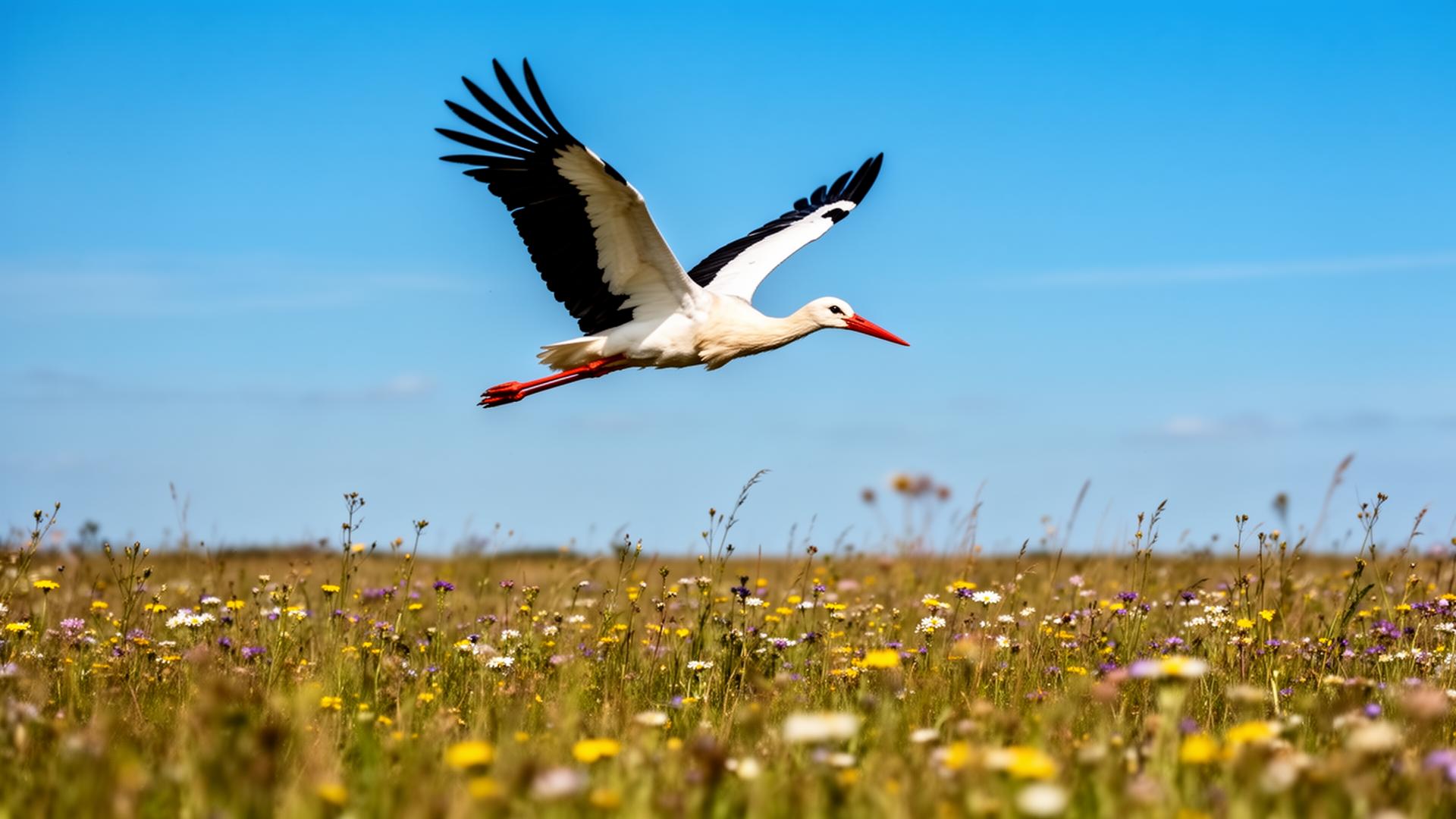
In May 2020, something remarkable happened in the Sussex countryside: a white stork pair at Knepp Estate raised chicks, the first storks to breed in Britain in nearly 600 years. These magnificent birds, with their 2-metre wingspans and clattering bill displays, were once a common sight in medieval England. Now they're back.
The White Stork Project represents one of Britain's most ambitious and visible species reintroductions, bringing a touch of Continental wildlife spectacle to the English countryside.
Britain's Lost Storks
White storks (Ciconia ciconia) were native breeding birds in Britain during the medieval period. They nested on buildings and in trees, and were considered good omens, protected by tradition.
Evidence of their presence comes from:
- Place names like Storrington ("stork village") in West Sussex
- Medieval records of storks nesting on St Giles Cathedral, Edinburgh
- Bones found in archaeological sites across England
- References in historical documents to stork nests on buildings
By the 1400s, storks had disappeared as breeding birds. Hunting, wetland drainage removing feeding habitat, and possibly the climate cooling of the Little Ice Age drove them out. Only occasional migrants continued to visit.
The Stork Project
The White Stork Project began in 2016, led by a partnership including Knepp Estate, Cotswold Wildlife Park, Wadhurst Park, and others. The goal: establish a self-sustaining population of at least 50 breeding pairs in southern England.
The project's approach:
Breeding Centres
Captive breeding at multiple locations produces chicks for release, while maintaining genetic diversity.
Soft Release
Young storks are released into suitable habitat after being raised in enclosures, allowing them to acclimatise gradually.
Nest Platforms
Artificial nest platforms on poles and buildings encourage storks to settle and breed in appropriate locations.
Monitoring
GPS tracking and ring reading allows the project to follow individual birds and understand their movements.
Success at Knepp
Knepp Estate's rewilded landscape proved ideal for storks. The mosaic of wetlands, grasslands, and scrub created by free-roaming animals provides excellent feeding habitat, while old oak trees offer nest sites.
Breeding Milestones
First successful breeding: a pair raises chicks at Knepp, the first in Britain since the 1400s.
Multiple pairs nest, with several producing chicks.
Population grows, with birds beginning to explore other sites.
Breeding pairs established at multiple locations in southern England.
The sight of storks soaring over the Sussex Downs or standing in wetlands is becoming less surprising each year as the population grows.
White Stork Ecology
White storks are fascinating birds with complex ecology:
- Size: Standing up to 115 cm tall with a wingspan of 155-215 cm, they're unmistakable in flight.
- Feeding: Hunt by walking slowly and stabbing at prey in wetlands, grasslands, and agricultural fields.
- Nesting: Build huge stick nests on buildings, poles, or trees, often using the same nest for years.
- Migration: European storks migrate to Africa for winter, though some British birds may become resident or short-distance migrants.
- Lifespan: Can live over 30 years, with pairs often staying together for life.
The Future of UK Storks
The project aims for a population that's self-sustaining without continued releases. Key factors for success include:
- Habitat: Maintaining wetlands and grasslands for feeding.
- Nest sites: Providing platforms on suitable buildings and poles.
- Public support: Encouraging landowners to welcome storks.
- Avoiding conflicts: Managing any issues with fish farms or gardens.
As more rewilding projects create suitable habitat and attitudes toward wildlife continue to improve, storks could become a common sight across southern England within a generation.
Where to See Storks
Stork Watching Locations
- •Knepp Estate, Sussex: The best location, with safaris and walking trails through stork habitat.
- •Cotswold Wildlife Park: Breeding centre with viewable storks.
- •Sussex countryside: Storks wander widely and may appear anywhere in the area.
- •Check local sightings: Follow bird news sites for reports of wandering storks.
At Knepp, you might see storks on nest platforms, feeding in wet fields, or thermalling overhead on warm days. The clattering sound of their bill greeting is something you won't forget.
Experience Wildlife in Wales
While storks haven't reached Wales yet, the Grange Project offers encounters with diverse wildlife in a rewilding landscape.
Further Resources
Watch
White Stork Project | BBC One Show
The remarkable story of stork reintroduction at Knepp Estate.
Stork Chicks Hatch at Knepp
Watch the first wild-born stork chicks in centuries.
Frequently Asked Questions
Were white storks ever native to Britain?
Yes! White storks bred in Britain until the 15th century, nesting on buildings and in trees. Place names like 'Storrington' in Sussex and historical records confirm their presence. They became extinct due to hunting, wetland drainage, and possibly climate cooling during the Little Ice Age.
Are storks breeding in the UK now?
Yes! Since 2020, white storks have bred successfully at Knepp Estate in West Sussex as part of a reintroduction project. By 2024, multiple pairs were nesting and the population is growing. Wild storks from Europe also occasionally breed in Britain.
Do storks really deliver babies?
The myth likely arose because storks nested on chimneys and rooftops in Europe, and their spring arrival coincided with higher birth rates. The association became deeply embedded in folklore. In reality, storks deliver frogs, fish, and small mammals to their own chicks!
Where can I see white storks in the UK?
The main UK population is at Knepp Estate, West Sussex, where safaris and walking trails offer good chances to see them. Storks also wander widely and are increasingly seen across southern England. Check local bird news for sightings near you.
What do white storks eat?
White storks are opportunistic predators eating frogs, fish, insects, small mammals, reptiles, and even young birds. They hunt by walking slowly through wetlands and grasslands, stabbing at prey with their long bills. A single stork can eat hundreds of grasshoppers in a day.
Continue Reading
Stay Updated on Rewilding
Join our newsletter for the latest rewilding news, guides, and updates from The Grange Project.