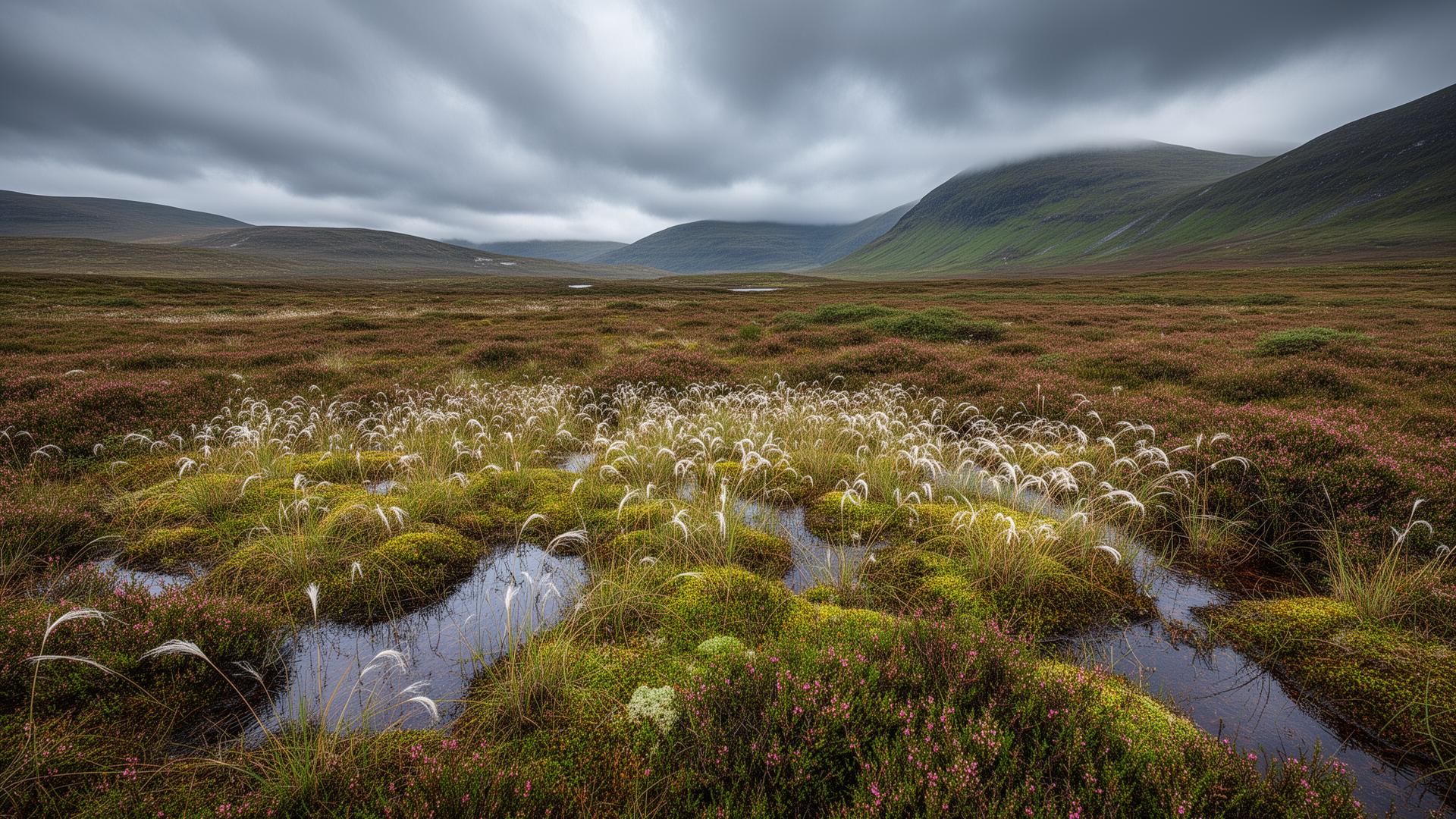
Beneath the wild uplands of Britain lies a hidden climate powerhouse. UK peatlands store around 3 billion tonnes of carbon—more than all the forests of Britain, France, and Germany combined. But decades of damage have turned many peatlands from carbon sinks into sources, releasing stored carbon that took thousands of years to accumulate.
Now, a restoration revolution is underway. Across Scotland, Wales, and the English uplands, peatlands are being rewet, restored, and returned to active growth. It's one of the most powerful climate actions we can take—and it brings remarkable wildlife back too.
The Carbon Giants
Peat forms when dead plant material can't fully decompose because it's waterlogged. Layer upon layer builds up over millennia, locking carbon away. Britain's peatlands started forming around 10,000 years ago after the last Ice Age. Some are over 10 metres deep—10,000 years of accumulated carbon.
Peatland by Numbers
- • 3 billion tonnes of carbon stored in UK peatlands
- • 12% of the UK is peatland
- • 80% of UK peatlands are damaged
- • 23 million tonnes of CO2 released annually from degraded peat
- • Healthy peat grows just 1mm per year
To put this in context: UK peatland carbon emissions equal those of around 7 million cars. Restoring our peatlands could deliver 10% of the carbon savings needed to reach net zero.
UK Peatlands
The UK holds a globally significant share of the world's peatlands. Most of our peat is "blanket bog"—a type found only in the wettest, coolest parts of the world. We have around 13% of the world's total.
Scotland
Home to 60% of UK peatland. The Flow Country of Caithness and Sutherland is one of the world's most important peatlands—a vast, open landscape of pools and moss-covered blanket bog.
England
Significant peatlands in the Pennines, North York Moors, Peak District, and Lake District fells. Much is degraded by drainage, burning, and overgrazing.
Wales
Important upland peatlands in Snowdonia, the Cambrian Mountains, and the Brecon Beacons. Welsh peatlands store around 184 million tonnes of carbon.
Northern Ireland
Peatlands cover around 12% of the land. Many lowland bogs have been cut for fuel, but upland blanket bog survives in the Sperrins and Antrim Hills.
Damage and Decline
An estimated 80% of UK peatlands are in damaged condition. The carbon that took millennia to accumulate is being released in decades. Key causes include:
Drainage
Thousands of miles of ditches ("grips") were dug from the 1950s onwards to drain uplands for grazing. This lowered water tables, causing peat to dry out and decompose. Drained peat oxidises, releasing CO2.
Burning
Rotational burning on grouse moors removes heather and damages peat surfaces. It releases carbon, reduces water storage, and harms peat-forming sphagnum mosses. Burning on deep peat is now restricted in England.
Overgrazing
Too many sheep compact peat, damage vegetation, and prevent sphagnum recovery. Heavy grazing keeps peatlands in degraded states even if other pressures are reduced.
Peat Extraction
Commercial peat extraction for horticulture has destroyed lowland raised bogs. Though largely phased out in the UK, peat continues to be imported. Home gardeners can help by choosing peat-free compost.
Afforestation
From the 1950s to 1980s, vast areas of peatland were planted with non-native conifers. The trees dried out the peat and the plantations are carbon-negative overall. Removing these trees is now part of restoration.
Restoration in Practice
Peatland restoration is scaling up rapidly, driven by climate and biodiversity targets. The goal is to rewet damaged peat, stop carbon loss, and return peatlands to active peat-forming condition.
Ditch Blocking
The most common restoration technique. Drainage ditches are blocked with peat, plastic, or wooden dams to raise water levels. Water spreads across the bog surface, rewetting dried peat and creating conditions for sphagnum to return.
Tree Removal
Conifers planted on peatland are being felled and removed. This allows water tables to rise and light to reach the bog surface. The Flow Country, once threatened by forestry, is now seeing massive tree removal for restoration.
Sphagnum Reintroduction
Sphagnum moss is the key peat-forming plant. On badly degraded sites, sphagnum can be propagated and spread to kickstart recovery. This "moss bombing" accelerates the return of active peat formation.
Grazing Management
Reducing sheep numbers allows vegetation to recover. Some projects remove sheep entirely; others use light grazing by cattle or native ponies which has less impact on sphagnum.
Major Restoration Projects
- • Great North Bog – restoring 7,000+ sq km across northern England
- • Peatland Action – Scotland's national programme, 50,000+ hectares restored
- • Flow Country – bid for UNESCO World Heritage Status
- • Moors for the Future – Peak District and South Pennines restoration
- • Wales Peatland Action – restoring Welsh upland peat
Peatland Wildlife
Healthy peatlands support a distinctive community of species adapted to harsh, wet, nutrient-poor conditions:
Plants
- Sphagnum mosses – the peat-formers, in multiple species and colours
- Cotton grass – white fluffy seed heads iconic of upland bog
- Sundews and butterwort – carnivorous plants supplementing nutrients
- Cloudberry – arctic-alpine rarity at its southern limit
- Cranberry and bog rosemary – low shrubs of wet bog
- Cross-leaved heath and crowberry – dwarf shrubs of drier areas
Birds
- Golden plover – breeding on open moorland and bog
- Dunlin – small wader nesting in damp tussocks
- Curlew – Europe's most threatened bird, needs wet uplands
- Greenshank – elegant wader of Scottish bogs
- Short-eared owl – daylight-hunting predator of voles
- Red grouse – heather moorland specialist
Other Wildlife
- Large heath butterfly – Britain's only peatland butterfly
- Azure hawker dragonfly – rare dragonfly of Scottish bogs
- Palmate newt – breeding in boggy pools
- Mountain hare – turning white in winter
- Adder – common on drier peatland edges
Where to Visit
Experience peatland landscapes and see restoration in action:
Flow Country, Scotland
One of the world's most important peatlands. The Forsinard Flows RSPB reserve has a visitor centre, viewing platform, and boardwalk through restored bog.
Dove Stone, Peak District
Access to restored blanket bog above the reservoir. Part of the Moors for the Future partnership. Good for cotton grass in June.
RSPB Lake Vyrnwy, Wales
Blanket bog and heather moorland around a stunning reservoir. Red grouse, golden plover, and hen harrier. Visitor centre with walks of various lengths.
Langlands Moss, Scotland
Lowland raised bog near Glasgow with excellent boardwalk access. Sphagnum pools, sundews, and dragonflies. Good for beginners.
Visiting Tips
- •Stick to boardwalks: Walking on wet peat damages it and can be dangerous. Use provided paths.
- •Waterproof boots: Even boardwalks can be squelchy. Wellies or waterproof walking boots essential.
- •Best seasons: June for cotton grass and breeding birds; autumn for colour; winter for wildness.
- •Look down: The magic is at your feet—sphagnum, sundews, and bog pools reward close observation.
Explore Wales's Uplands
Stay at the Grange Project and explore the peatlands and uplands of mid-Wales. From our base, you can access some of Wales's wildest landscapes.
Further Resources
Watch
Restoring Peatlands for Climate | RSPB
How wetland and peatland restoration helps tackle the climate crisis.
Scotland's Peatland ACTION | NatureScot
Scotland's national peatland restoration programme in action.
Frequently Asked Questions
What is peatland and why is it important?
Peatland is wetland where waterlogged conditions prevent dead plant material from fully decomposing, building up as peat over thousands of years. Though covering only 3% of the world's land, peatlands store twice as much carbon as all the world's forests. UK peatlands store around 3 billion tonnes of carbon, more than all the forests of Britain, France, and Germany combined.
Why are peatlands damaged?
Peatlands have been drained for agriculture, burned for grouse moor management, overgrazed by sheep, and extracted for horticultural peat. These activities dry out the peat, causing it to decompose and release stored carbon as CO2. Damaged peatlands also lose their ability to store water and support specialist wildlife.
How are peatlands restored?
Restoration involves blocking drainage ditches to rewet the peat, removing trees planted on peatland, reducing grazing pressure, and stopping burning. Sphagnum moss—the peat-forming plant—can be reintroduced to accelerate recovery. Healthy peat is wet and spongy; restoration aims to return it to this state.
What wildlife lives on peatlands?
Healthy peatlands support distinctive species adapted to harsh, wet conditions: sundews and butterwort (carnivorous plants), sphagnum mosses, cotton grass, crowberry, and cloudberry. Birds include golden plover, dunlin, curlew, and short-eared owl. Large heath butterfly, bog-rosemary, and cranberry are peatland specialists.
Can I visit restored peatlands?
Yes! Sites like the Flow Country in Caithness and Sutherland, Dove Stone (Peak District), RSPB Lake Vyrnwy (Wales), and the Great North Bog project areas all welcome visitors. Many have boardwalks that allow access without damaging the delicate habitat. Spring and early summer are best for wildlife.
Continue Reading
Stay Updated on Rewilding
Join our newsletter for the latest rewilding news, guides, and updates from The Grange Project.