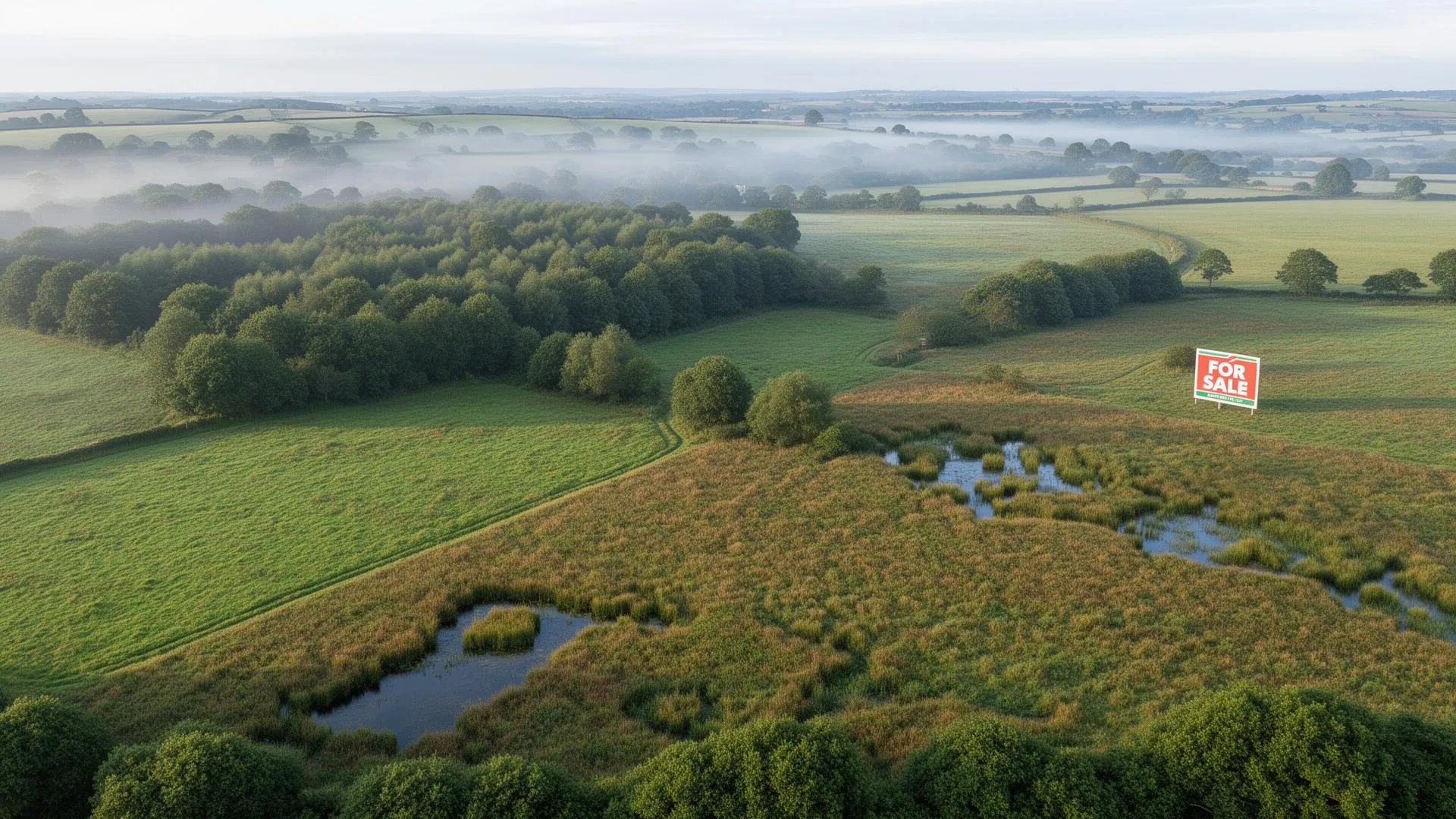
Buying land to restore nature is one of the most powerful things an individual can do for the environment. Whether you dream of creating a wildlife haven on a few acres or transforming a hillside farm into a rewilding project, this guide covers everything you need to know about purchasing land for nature restoration in the UK.
Land prices in rural Britain have changed significantly. Poor-quality agricultural land, which often has the highest ecological potential, can be surprisingly affordable. Meanwhile, new environmental payment schemes mean rewilded land can generate income without intensive farming. The economics increasingly favour nature.
Is Buying Land Right for You?
Before searching for land, honestly assess whether ownership is the right path. Land purchase requires significant capital, long-term commitment, and ongoing management. Consider these questions:
Key Questions to Ask Yourself
- 1.Budget: Can you afford not just the purchase price, but also legal fees, stamp duty, and ongoing management costs?
- 2.Time: Will you have time to visit, manage, and monitor the land regularly? Distance matters.
- 3.Skills: Do you have ecological knowledge, or access to expert advice? Rewilding benefits from informed decision-making.
- 4.Objectives: Are you seeking personal connection to nature, income generation, or conservation impact? These may require different approaches.
- 5.Exit strategy: How will you ensure the land remains protected if your circumstances change?
Alternatives to outright purchase include community land ownership, conservation easements on existing land, or volunteering with established projects. The garden rewilding guide shows how to create habitat without owning rural land.
Types of Land for Rewilding
Not all land is equal for rewilding. The best sites often have low agricultural value but high ecological potential. Understanding land classification helps you identify opportunities.
| Land Type | Typical Price (per acre) | Rewilding Potential |
|---|---|---|
| Upland hill farm (Grade 5) | £3,000-£8,000 | Excellent for peatland, upland oak, and natural regeneration |
| Marginal pasture (Grade 4) | £5,000-£12,000 | Good for woodland, meadows, and conservation grazing |
| Existing woodland | £8,000-£20,000 | Immediate habitat value; restoration of PAWS sites |
| Lowland pasture (Grade 3) | £8,000-£15,000 | Good for meadows, hedgerows, and mixed habitats |
| Arable land (Grade 1-2) | £10,000-£20,000+ | High value but lower priority for rewilding; better for regenerative farming |
| Wetland/floodplain | £3,000-£8,000 | Excellent for wetland restoration and flood management |
Wales and Scotland generally offer better value than southern England. The Welsh borders, Cumbria, and the Scottish uplands have concentrations of affordable marginal land with excellent rewilding potential. However, remoteness increases management challenges.
Priority Features to Seek
The most valuable sites for rewilding often include:
- • Existing natural features (streams, ponds, veteran trees, rock outcrops)
- • Connectivity to neighbouring wild or semi-wild land
- • Varied topography (slopes, valleys, wet areas)
- • Remnant habitat indicators (old hedgerows, ancient woodland fragments)
- • Water sources and riparian areas
How to Find Land
Land rarely appears on standard property websites. Finding suitable sites requires proactive searching through specialist channels.
Specialist Agents
Rural land agents handle most farmland sales. Key national agents include Savills, Knight Frank, Strutt & Parker, and Carter Jonas. Local agents often have better knowledge of off-market opportunities.
Register with multiple agents in your target area. Be specific about what you are seeking, including size, budget, and intended use for nature restoration.
Online Platforms
UKLandDirectory.org.uk and Rightmove (Land for Sale) list rural land. Woods4Sale.co.uk specialises in woodland. Farms.co.uk covers agricultural holdings.
Set up alerts for new listings matching your criteria. Good sites sell quickly, often before reaching wider marketing.
Off-Market Opportunities
Many landowners prefer private sales to avoid publicity. Build relationships in your target area: attend local markets, join farming networks, and talk to neighbours of potential sites.
Conservation charities occasionally sell land that no longer fits their portfolio. Estate sales and probate auctions can also reveal opportunities.
Auctions
Property auctions can offer below-market prices, especially for unusual or challenging sites. Check auction catalogues from Clive Emson, Network Auctions, and regional auctioneers.
Always conduct thorough due diligence before auction day. Once the hammer falls, you are legally committed to purchase.
Ecological Assessment
Before purchasing, assess the ecological baseline and potential of any site. This informs both your rewilding strategy and the site's true value.
Desktop Research
Before visiting, gather data from free online resources:
- Magic Maps (Defra): Check for SSSIs, SACs, SPAs, ancient woodland, priority habitats, and protected species records.
- Local Environmental Records Centre: Request species data for the site and surrounding area.
- Historic England: Check for scheduled monuments and historic environment designations.
- Old Ordnance Survey maps: Reveal lost features (ponds, orchards, hedgerows) that could be restored.
- Aerial photography: Google Earth historical imagery shows land use changes over decades.
Site Visits
Visit at different seasons if possible. Spring and summer reveal wildflowers and breeding birds; winter shows water movement and structural features. Look for:
On-Site Assessment Checklist
Habitat Features
- • Veteran or ancient trees
- • Species-rich hedgerows
- • Natural watercourses and springs
- • Wet flushes and boggy areas
- • Rock outcrops and exposed ground
- • Deadwood and standing dead trees
Wildlife Indicators
- • Breeding bird activity
- • Mammal signs (tracks, droppings)
- • Invertebrate diversity
- • Wildflower diversity in grassland
- • Indicator species (ancient woodland plants)
- • Lichen and moss diversity on trees
Connectivity
- • Links to neighbouring woodland
- • Wildlife corridors (hedgerows, streams)
- • Proximity to protected sites
- • Landscape-scale conservation potential
Threats to Assess
- • Evidence of overgrazing
- • Drainage modifications
- • Non-native invasive species
- • Pollution sources upstream
- • Neighbouring intensive land use
Professional Surveys
For significant purchases, commission professional ecological surveys. A Phase 1 Habitat Survey costs £500-£2,000 depending on site size and provides a baseline for future monitoring. Protected species surveys (bats, great crested newts, badgers) may be needed if development is planned.
Legal Requirements
Land purchase involves significant legal complexity. Always use a solicitor experienced in rural conveyancing. Key issues to investigate:
Title and Boundaries
Verify the seller owns what they claim to sell. Land Registry records show registered boundaries, but these may not match physical features on the ground. Unregistered land (still common in rural areas) requires more careful investigation of historic deeds.
Access Rights
Confirm you will have legal access to the land. This may require rights of way over neighbouring property. Check for public rights of way crossing the site, which you must maintain. In Scotland, different access laws apply under the Land Reform Act.
Restrictive Covenants
Previous owners may have imposed restrictions on land use. Agricultural covenants, building restrictions, and rights retained by sellers can all affect what you can do. Some covenants may prevent non-agricultural use, though rewilding generally qualifies as agricultural land management.
Mineral and Sporting Rights
These are often severed from surface ownership. Mineral rights may allow third parties to extract resources. Sporting rights (shooting and fishing) may be retained by the seller or leased to others. Clarify these before purchase if you wish to exclude shooting from your land.
Environmental Designations
SSSIs, SACs, and other designations bring legal obligations. You may need consent for certain operations and must notify Natural England (or equivalent) of any potentially damaging activities. However, designations also protect the site's ecological value.
Tenancies and Agreements
Check for agricultural tenancies (which can be difficult to terminate), grazing agreements, or shooting leases. Existing environmental schemes (Countryside Stewardship, SFI) transfer to the new owner with ongoing obligations.
Stamp Duty Land Tax
Non-residential land purchases attract different SDLT rates than residential property. The threshold is £150,000, meaning no SDLT is payable on land costing less than this. Above £150,000, rates are 2% up to £250,000 and 5% on amounts above £250,000. Wales charges Land Transaction Tax and Scotland charges Land and Buildings Transaction Tax, both with different rates and thresholds.
Funding Your Purchase
Land purchase typically requires significant capital. Explore these funding routes:
Personal Savings
Most individual land purchases are funded from savings. Unlike property, agricultural land rarely appreciates rapidly, so view it as an environmental investment rather than financial speculation.
Agricultural Mortgages
Specialist lenders including AMC, Scottish Widows, and Clydesdale offer agricultural mortgages. Typically require 30-50% deposit and demonstration of agricultural income. Rewilding income from environmental schemes may qualify.
Community Ownership
Community Land Trusts and Community Interest Companies can raise capital from multiple investors. The Scottish Land Fund supports community buyouts. Community shares offer another route to collective ownership.
Conservation Partners
Wildlife Trusts, RSPB, and Woodland Trust occasionally partner with private landowners on significant sites. Conservation covenants can attract reduced purchase prices in exchange for legal protection.
Note: There is currently no government grant scheme specifically for land purchase for conservation. However, the Rewilding for Landowners guide details environmental payments available once you own land, which can provide ongoing income.
The Purchase Process
Land purchase follows similar stages to property purchase but with additional considerations for rural and agricultural land.
Make an Offer
Submit a formal offer through the selling agent. Include any conditions (subject to survey, financing, etc.). Offers are not legally binding until contracts are exchanged. In Scotland, offers become binding once accepted.
Instruct Solicitor
Appoint a solicitor experienced in rural conveyancing immediately after offer acceptance. They will conduct searches, review title documents, and advise on any issues. Rural conveyancing typically takes 8-12 weeks.
Conduct Surveys
Commission any surveys needed: ecological assessment, soil survey, drainage assessment, or building survey for any structures. Results may inform price renegotiation or reveal issues to address post-purchase.
Arrange Finance
Confirm mortgage offer (if using) and ensure funds are ready for exchange. Transfer deposit to solicitor's client account before exchange date.
Exchange Contracts
At exchange, both parties are legally committed. You pay the deposit (typically 10%) and agree a completion date, usually 2-4 weeks later.
Completion
On completion day, the balance of purchase price transfers and you become the legal owner. Your solicitor registers the transfer with Land Registry and you receive the keys (if there are buildings).
After Purchase: First Steps
Once you own the land, resist the urge to immediately transform it. The first year should focus on understanding what you have.
Year One Priorities
- 1.Baseline Monitoring: Record what wildlife is present through systematic surveys. This becomes your reference point for measuring future change.
- 2.Meet Neighbours: Build relationships with adjoining landowners. Their cooperation may be needed for wildlife corridors, shared boundaries, or future expansion.
- 3.Apply for Schemes: Register with the Rural Payments Agency (RPA) and apply for relevant environmental schemes. SFI applications can be made year-round.
- 4.Address Urgent Issues: Control invasive species (Japanese knotweed, Himalayan balsam) before they spread. Fix broken fencing if livestock containment is needed.
- 5.Develop a Plan: Based on your observations, create a 5-10 year rewilding vision. What habitats will you create or restore? What species do you hope to support?
Consider joining the Rewilding Network to connect with other landowners and access expert support. Local Wildlife Trusts can also provide advice on habitat management.
Case Studies
The Grange Project, Monmouthshire
In 2023, Tom and Chloe Constable purchased an 80-acre site in the Wye Valley. The land included semi-improved pasture (previously used for winter forage for beef cattle), a small woodland block, and hedgerows. They reduced grazing pressure, planted native trees, created wetland features, and established the Wilder Podcast while developing on-site accommodation for visitors.
Key lesson: Starting with semi-improved grassland allowed rapid visible change. Diversification through accommodation creates income while rewilding proceeds.
Wild Ken Hill, Norfolk
The Buscall family, who have owned this 4,000-acre coastal farm since the 1870s, began rewilding in 2019. They transformed sections of existing farmland rather than purchasing new land. The project combines rewilding, regenerative farming, and traditional conservation side by side, featuring Red Poll cattle, Exmoor ponies, and Norfolk's first beavers in centuries.
Key lesson: Large-scale rewilding can work on productive farmland through gradual transition and diverse land use approaches.
Tir Natur, Cambrian Mountains
This Welsh rewilding charity aims to purchase 1,000 acres in the Cambrian Mountains through crowdfunding. Supported by Iolo Williams, the project raised over £90,000 in its initial campaign. Their approach combines community ownership with partnerships on neighbouring farms, creating a landscape-scale mosaic of rewilding and sustainable agriculture.
Key lesson: Crowdfunding and community engagement can mobilise resources beyond individual means. Collaboration with neighbours multiplies impact.
Making the Leap
Buying land for rewilding is not a decision to take lightly. It requires capital, commitment, and patience. But for those with the resources and dedication, land ownership offers the profound satisfaction of watching nature recover under your care.
Start by defining your goals and budget. Search widely and be prepared to wait for the right opportunity. Conduct thorough due diligence before committing. And once you own the land, take time to understand it before transforming it.
"The best time to buy land was twenty years ago. The second best time is now. Nature needs more people willing to give it space to recover."
If land purchase is not right for you, remember there are many other ways to support rewilding: volunteering with projects, sponsoring land through Platform Nature, rewilding your garden, or advocating for nature-friendly policies. Every contribution matters.
Further Resources
Watch
How Do You Actually Rewild a Property?
The FT explores how to go about rewilding land in the UK, visiting two properties at different stages of the process.
Isabella Tree: Rewilding a 3,500 Acre British Farm
The author of Wilding explains how she and Charlie Burrell transformed the Knepp Estate into Britain's pioneering rewilding success.
Learn More
Buying Woodland: A Guide for Owners
Woodland TrustComprehensive guidance on purchasing woodland for conservation and rewilding.
Rewilding Network
Rewilding BritainJoin the network to connect with other rewilding landowners and access support.
Magic Maps
DefraCheck environmental designations, protected species records, and habitat data for any UK location.
Land Registry
HM Land RegistryVerify ownership and check title details for any registered land in England and Wales.
Frequently Asked Questions
How much does land for rewilding cost in the UK?
Land prices vary significantly by location and type. Poor-quality agricultural land (Grade 4-5) suitable for rewilding typically costs £5,000-£15,000 per acre in upland areas, while lowland sites near amenities may reach £20,000+ per acre. Welsh hill farms often offer better value than English lowlands. Bare land without buildings is cheaper but limits diversification options.
What is the minimum land size needed for rewilding?
There is no minimum size for rewilding. A single acre can support a wildflower meadow, pond, and hedgerows. However, 10-20 hectares (25-50 acres) allows for multiple habitat types and viable conservation grazing. Larger sites (50+ hectares) enable natural processes like succession and support larger mammals. Connectivity to neighbouring wild land is often more important than absolute size.
Do I need planning permission to rewild land I purchase?
Most rewilding activities are permitted development and do not require planning permission. This includes reducing grazing, creating ponds under 0.25 hectares, planting hedgerows, and allowing natural regeneration. However, tree planting on certain agricultural land may require an Environmental Impact Assessment. New buildings, access tracks, or significant earthworks typically need planning consent.
Can I live on rewilding land in the UK?
Living on bare agricultural land is generally not permitted without planning permission for a dwelling. You would need to demonstrate an essential agricultural or forestry need, which is difficult for rewilding alone. Some buyers purchase land with existing buildings (farmhouses, barns) that can be converted. Rural exception sites and self-build plots offer alternative routes to rural living.
What legal checks should I do before buying land for rewilding?
Essential legal checks include: title verification and boundary confirmation, rights of way and access rights, restrictive covenants (e.g., agricultural use only), mineral and sporting rights, environmental designations (SSSI, SAC, SPA), contamination history, water rights and drainage obligations, and any existing tenancies or grazing agreements. Always use a solicitor experienced in rural conveyancing.
Can I get grants for land I buy for rewilding?
Yes. Once you own land, you can apply for environmental schemes including SFI (Sustainable Farming Incentive), Countryside Stewardship, and woodland creation grants. However, grant payments are made for management activities, not land purchase. The Woodland Trust's MOREwoods scheme offers free trees and guards. Some charitable trusts support land acquisition for conservation purposes.
Continue Reading
Stay Updated on Rewilding
Join our newsletter for the latest rewilding news, guides, and updates from The Grange Project.