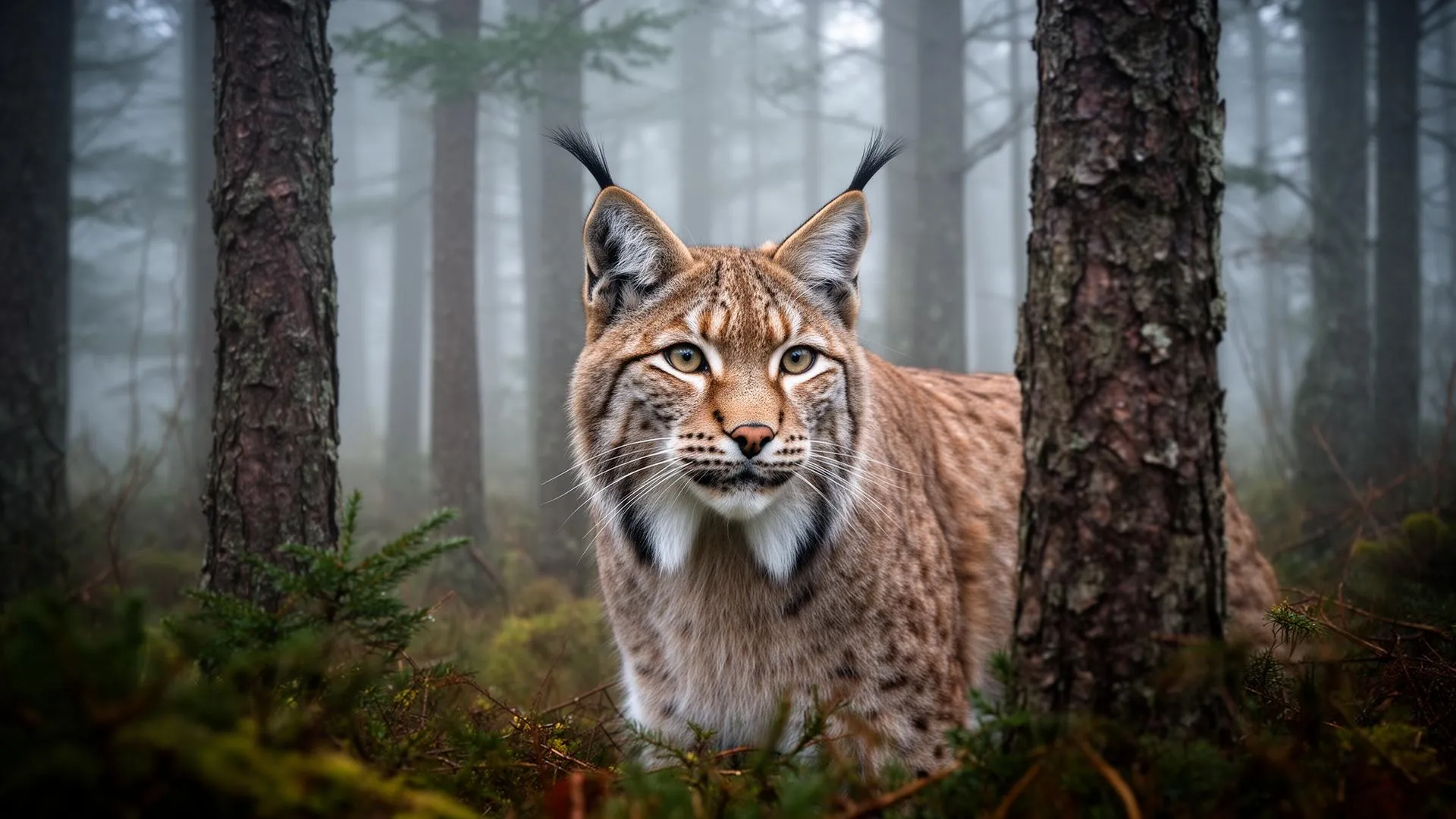
The Eurasian lynx is often described as Britain's most likely returning predator. Unlike wolves, which face fierce opposition, lynx generate cautious interest even from some farmers. But is Britain ready? And would lynx actually solve our deer problem or create new conflicts?
This article presents the strongest arguments for and against lynx reintroduction, examines the scientific evidence, and looks at how European countries manage their lynx populations. Our aim is to inform the debate, not decide it for you.
The History of Lynx in Britain
The Eurasian lynx was once widespread across Britain. Fossil evidence shows they lived here throughout the last ice age and into the Holocene. Cave paintings and bone remains confirm their presence from Scotland to southern England.
Their decline began with deforestation. As Britain's great wildwood was cleared for agriculture, lynx lost both habitat and prey. Persecution accelerated their extinction. Their beautiful spotted fur was highly valued, and as "vermin" competing with human hunters, they were systematically killed. The last British lynx likely disappeared around 700 CE.
For 1,300 years, Britain has been without this forest cat. Meanwhile, lynx populations have recovered across much of Europe, from Scandinavia to the Balkans, often through deliberate reintroduction programmes. Switzerland, Germany, France, and Poland all have thriving lynx populations today.
The Case For Lynx Reintroduction
1. Deer Population Control
Britain's deer populations have exploded. With an estimated 2 million deer and no natural predators, overgrazing prevents woodland regeneration across vast areas. Each lynx kills approximately 50 roe deer per year. A population of 400 lynx could remove around 20,000 deer annually, roughly equivalent to the efforts of 1,000 stalkers.
Beyond direct predation, lynx create a "landscape of fear" that changes deer behaviour. When predators are present, deer spend less time in vulnerable areas like woodland edges and stream banks, allowing young trees and vegetation to recover.
2. Woodland Regeneration
The UK has just 14% woodland cover compared to a 37% European average. Deer browsing is a primary barrier to natural regeneration. Expensive deer fencing (£10-15 per metre) is currently the main solution, but fences need maintenance and eventually fail.
Lynx could provide a permanent, self-sustaining alternative. Research from Europe shows that lynx presence correlates with higher tree sapling survival and greater forest diversity.
3. Ecotourism Potential
Lynx are charismatic and mysterious. Despite being almost impossible to see in the wild, their presence drives tourism. In the Harz Mountains of Germany, lynx-themed trails and interpretation centres attract visitors. Photography hides in Romania and Poland cater to wildlife enthusiasts willing to pay premium prices for a chance glimpse.
The Scottish Highlands already attract wildlife tourists for eagles and deer. Lynx could add another reason to visit, bringing income to remote rural communities.
4. Lower Risk Than Wolves
Compared to wolves, lynx pose fewer challenges. They're solitary, territorial, and naturally secretive. They rarely take livestock larger than sheep and strongly prefer wild deer. They pose zero threat to humans. For communities wary of apex predators, lynx represent a more acceptable first step.
The Case Against Lynx Reintroduction
1. Sheep Predation
Lynx do kill sheep. In Norway, with around 400 lynx, annual sheep losses are 5,000-8,000 animals. While this represents less than 0.5% of the national flock, losses are not evenly distributed. Individual farmers near lynx territories can suffer significant losses.
Norway has an extensive compensation scheme, but farmers report that payments rarely cover the true economic and emotional cost. The stress of finding dead animals, disruption to farming routines, and time spent on compensation claims all take their toll.
2. Rural Community Consent
The 2024 Nuffield Farming report found that most British farmers oppose large carnivore reintroduction. While opposition to lynx is softer than opposition to wolves, genuine concerns remain. Many feel that urban conservationists are making decisions about rural land without understanding the realities of farming.
Successful reintroduction requires community consent. Imposing lynx against local wishes would generate resentment and likely lead to illegal persecution.
3. Habitat Concerns
Lynx are forest specialists. Britain's fragmented woodlands may not provide continuous habitat for a viable population. Young dispersing lynx would need to cross open farmland, roads, and villages to establish new territories.
The Scottish Highlands have the most suitable habitat, but even there, woodland cover is patchy. Some scientists question whether Britain can support a genuinely wild, self-sustaining lynx population without significant habitat restoration first.
4. The "Thin End of the Wedge" Argument
Some opponents view lynx as the first step toward wolf reintroduction. They fear that once the principle of predator reintroduction is established, campaigners will push for larger, more dangerous species. This concern, whether justified or not, fuels opposition beyond the lynx's own impacts.
What Does the Science Say?
The ecological case for lynx is strong. Research from Europe confirms that lynx effectively regulate roe deer populations and that their presence benefits forest ecosystems. A 2020 study in Switzerland found that areas with lynx had significantly higher tree sapling density.
Britain has suitable habitat. Researchers at the University of Oxford modelled potential lynx distribution and concluded that the Scottish Highlands, Kielder Forest, and parts of Wales could support populations. The estimated carrying capacity is 400-450 lynx nationally.
However, scientists emphasise that habitat fragmentation is a genuine concern. Lynx need large territories (starting from 80 km² and potentially exceeding 200 km² for males) and young animals must disperse to find new territories. In Britain's crowded landscape, road mortality and conflict during dispersal could limit population growth.
The scientific consensus is that lynx reintroduction is ecologically feasible, but success would depend on careful site selection, community acceptance, and long-term management.
European Case Studies
Switzerland
Lynx were reintroduced to the Swiss Alps in the 1970s. The population grew slowly but now stands at around 300 animals. Livestock losses occur (mainly sheep in summer pastures) but are compensated by the federal government. Illegal killing remains a problem—DNA evidence suggests poaching has limited population growth.
Germany
Lynx returned to Germany through reintroduction (Harz Mountains, Bavarian Forest) and natural expansion from France and Switzerland. The population is around 150 animals. Conflicts are minimal in forested areas but tensions exist where lynx encounter sheep on forest edges.
Norway
Norway offers the most relevant comparison for upland sheep farming areas. With around 400 lynx, annual sheep losses are significant (5,000-8,000). The government compensates farmers but also permits limited lynx culling to manage the population. This controversial approach maintains coexistence but at a lower lynx density than conservationists would prefer.
Practical Challenges
Even with community support, reintroduction would face practical hurdles:
- Sourcing animals: Wild lynx would need to be caught and transported from European populations, requiring international agreements
- Genetic diversity: A founding population of at least 10-15 animals would be needed to avoid inbreeding
- Monitoring: GPS collaring and long-term tracking would be essential but expensive (approximately £5,000 per animal annually)
- Compensation: A robust, rapid compensation scheme would need to be operational before release
- Legal protection: Lynx would need to be added to protected species lists with penalties for killing
- Road mortality: Lynx-road crossings and warning signs might be needed in key areas
Current Proposals
Lynx UK Trust (Kielder Forest)
In 2017, the Lynx UK Trust applied to Natural England for a trial reintroduction of six lynx to Kielder Forest in Northumberland. The application was rejected in December 2018, with Natural England citing insufficient community support and concerns about the applicant's capacity to manage the project long-term.
Lynx to Scotland
The Lynx to Scotland project, led by Scotland: The Big Picture, takes a different approach. Rather than rushing to application, they're conducting extensive community consultations in potential release areas. Their stated aim is to build genuine local support before any formal proposal. As of 2026, no application has been submitted, but dialogue continues.
Our View
Lynx reintroduction is ecologically desirable. Britain's forests would benefit from predation pressure on deer, and the presence of this beautiful cat would enrich our wild places. The science supports feasibility.
However, successful reintroduction cannot be imposed. Rural communities, particularly sheep farmers, have legitimate concerns that deserve serious engagement. Compensation schemes must be robust and accessible. Farmers must be partners, not obstacles.
We support the patient, dialogue-first approach of Lynx to Scotland over rushed applications that generate opposition. Building consent takes time—years, perhaps decades. But that investment in relationships is essential for long-term success.
In the meantime, habitat restoration should continue. More woodland, better connected forest corridors, and thriving wild deer populations will make future lynx reintroduction more likely to succeed when the time is right.
Further Resources
Watch
The Lynx Went Extinct: Here's How It Could Return
Mossy Earth explores lynx reintroduction to Scotland, interviewing key stakeholders on habitat, prey, and coexistence.
Rewilding the UK with Lynx
BBC's Mike Dilger discusses the benefits of lynx reintroduction to Britain.
Learn More
Lynx to Scotland Project
Scotland: The Big PictureCommunity-led consultation on lynx reintroduction to the Highlands.
Farmers' Perspectives on Large Carnivore Reintroductions
Nuffield Farming ScholarshipsIn-depth study of farmer attitudes to lynx and wolf reintroduction.
Eurasian Lynx Conservation
IUCNInternational conservation status and population data.
Frequently Asked Questions
When did lynx go extinct in Britain?
The Eurasian lynx was hunted to extinction in Britain approximately 1,300 years ago, during the early medieval period. They survived in Scotland and northern England longer than in the south, but deforestation and persecution for their valuable fur led to their disappearance by around 700 AD.
Would lynx attack humans?
No. There are no verified records of wild Eurasian lynx attacking humans in modern times, despite populations of over 10,000 across Europe. Lynx are secretive, solitary animals that actively avoid human contact. You would be extremely unlikely to ever see one even in areas with established populations.
Do lynx kill sheep?
Lynx can and do occasionally take sheep, particularly lambs. In Norway, where lynx and sheep share the same landscape, annual losses are typically 5,000-8,000 sheep (less than 0.5% of the national flock). However, lynx strongly prefer wild prey like roe deer when available. In forested areas with abundant deer, livestock losses are minimal.
How many lynx could Britain support?
Research suggests Britain could potentially support 400-450 lynx, primarily in the Scottish Highlands but also in forested areas of England and Wales. The Kielder Forest alone could support around 50 lynx. However, initial reintroduction proposals have been for much smaller trial populations of 5-10 animals.
Would lynx control deer populations?
Yes, but partially. A single lynx kills approximately 50-60 roe deer per year. A population of 400 lynx could cull around 20,000-25,000 deer annually. While significant, this would supplement rather than replace human deer management. The 'landscape of fear' effect may also change deer behaviour, reducing browsing pressure on young trees.
Has any lynx reintroduction been approved in the UK?
Not yet. The Lynx UK Trust submitted a formal application to Natural England in 2017 for a trial reintroduction in Kielder Forest, Northumberland, but it was rejected. The Lynx to Scotland project has been consulting communities in the Highlands about a potential trial, but no application has been submitted as of 2026.
Continue Reading
Eurasian Lynx: Species Profile
Complete guide to the Eurasian lynx and its potential role in British ecosystems.
Wolf Reintroduction Debate
The larger predator question: should wolves return to Britain?
Rewilding vs Conservation
Understanding the difference between rewilding and traditional conservation.
Stay Updated on Rewilding
Join our newsletter for the latest rewilding news, guides, and updates from The Grange Project.