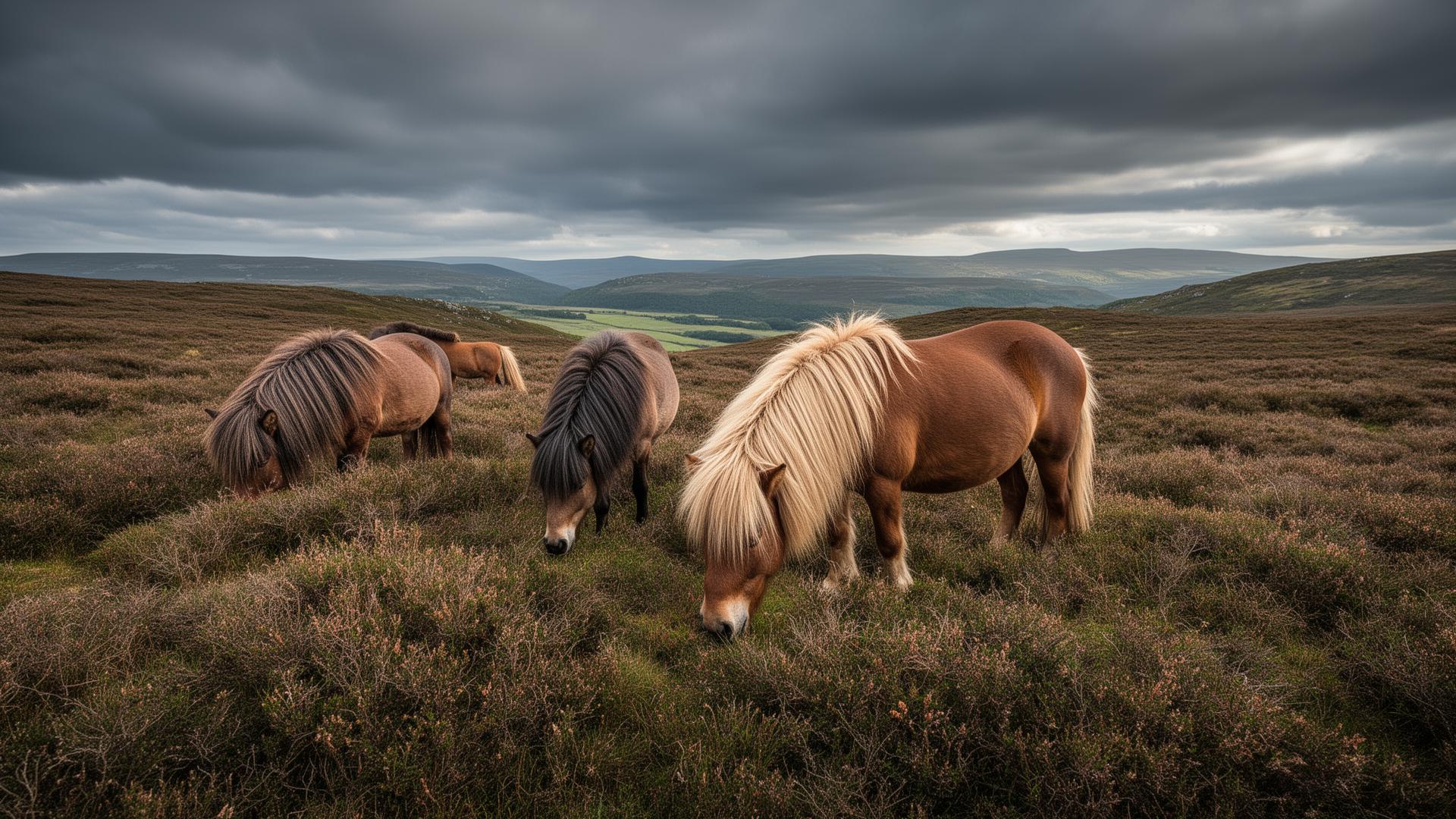
Before humans transformed the British landscape, wild horses grazed alongside aurochs, elk, and other large herbivores, shaping a mosaic of woodland, scrub, and open grassland. Today, hardy native ponies are being used in rewilding projects to recreate these grazing patterns and restore the biodiversity that comes with them.
From the ancient Exmoor ponies of the southwest to Konik ponies in fenland reserves, these remarkable animals are proving that sometimes the best conservation tool has four legs.
History of Wild Horses in Britain
True wild horses (Equus ferus) roamed Britain until around 4,000 years ago. Cave paintings and fossil evidence show they were an important part of the post-glacial landscape, alongside other megafauna.
As humans settled and farmed the land, wild horses were domesticated or disappeared. But some breeds, particularly the Exmoor pony, retain characteristics of these ancient wild horses and have lived in semi-wild conditions for thousands of years.
"The Exmoor pony is the closest living relative of the original British wild horse, with physical characteristics that have remained unchanged for thousands of years."
Breeds Used in Rewilding
Exmoor Pony
Britain's oldest and most primitive native breed, with a double-layered coat and "toad eye" that sheds rain. Incredibly hardy, they thrive on poor vegetation and can survive harsh winters with minimal shelter. Used extensively at Knepp Estate and many nature reserves.
Status: Endangered (fewer than 4,000 worldwide)
Konik Pony
A Polish breed descended from the tarpan, the wild horse of Eastern Europe. Koniks are particularly suited to wetland grazing and are used at Wicken Fen, RSPB Lakenheath, and other wetland restoration projects. Their dun colour and dorsal stripe echo wild ancestors.
Status: Conservation-dependent
Dartmoor Pony
Native to the high moors of Devon, Dartmoor ponies have grazed the moor for centuries. They're essential to maintaining the moorland's characteristic habitat, preventing bracken and gorse from dominating.
Status: Vulnerable
New Forest Pony
One of the recognized breeds in the New Forest, these ponies have roamed the forest for over a thousand years. Their grazing maintains the unique mosaic of heath, bog, and woodland.
Status: At risk
Benefits of Pony Grazing
Horses graze differently from cattle or sheep, and this creates unique benefits for biodiversity:
Selective Grazing
Ponies prefer certain grasses and avoid others, creating varied sward heights that benefit different insects and ground-nesting birds.
Rough Vegetation
Unlike sheep, ponies eat coarse grasses and rushes that other grazers avoid, preventing these from dominating habitats.
Latrine Areas
Horses create dung piles in specific areas, leaving other patches ungrazed. This creates nutrient-rich and nutrient-poor zones, increasing habitat diversity.
Path Creation
Regular pony movements create pathways through vegetation, providing corridors for other wildlife and access to different habitat areas.
UK Pony Grazing Projects
- Knepp Estate, Sussex: Exmoor ponies graze alongside Longhorn cattle, Tamworth pigs, and fallow deer in this famous rewilding project.
- Wicken Fen, Cambridgeshire: Konik ponies help manage this National Trust reserve, the UK's oldest nature reserve.
- RSPB Minsmere, Suffolk: Ponies graze the heathland and reedbed edges.
- Exmoor National Park: Hundreds of Exmoor ponies roam semi-wild on the moor.
- New Forest National Park: Around 4,500 ponies graze the forest under ancient commoning rights.
- Wilder Blean, Kent: Exmoor ponies work alongside bison and cattle.
Challenges & Welfare
While pony grazing offers many benefits, it comes with responsibilities:
- Welfare monitoring: Even hardy breeds need regular checks and occasional veterinary care.
- Winter feeding: In some years, supplementary hay may be needed during harsh winters.
- Population management: Numbers must be controlled to prevent overgrazing and maintain animal welfare.
- Road safety: Where ponies roam near roads, accidents are a concern, particularly in the New Forest.
- Public interaction: Visitors feeding ponies can cause health problems and dangerous behaviour.
Responsible rewilding projects invest in proper welfare protocols and work closely with experienced graziers to ensure animal wellbeing.
Where to See Wild Ponies
Best Places to See Wild Ponies
- •Exmoor National Park: See the famous Exmoor ponies in their native habitat, particularly around Winsford Hill and Dunkery Beacon.
- •New Forest: Ponies roam throughout the forest and are easy to spot from roads and walking trails.
- •Dartmoor: Hardy ponies graze the open moorland year-round.
- •Knepp Estate: Safaris and walking trails offer chances to see Exmoor ponies.
- •Wicken Fen: Konik ponies visible from the reserve's trails.
Experience Rewilding First-Hand
Stay at the Grange Project and experience how conservation grazing is restoring Welsh landscapes.
Further Resources
Watch
Learn the Full Story of the Endangered Exmoor Ponies | FEI
Exploring the ancient Exmoor pony breed and its role in conservation.
Knepp Rewilded - A Short Film | Knepp Estate
How ponies and cattle are being used to restore habitats across the UK.
Frequently Asked Questions
What breeds of ponies are used in rewilding?
The most common breeds used in UK rewilding projects are Exmoor ponies, Konik ponies, Dartmoor ponies, and New Forest ponies. Each breed has different characteristics: Exmoors are the most ancient and hardy, Koniks are excellent in wetlands, while Dartmoor and New Forest ponies are well-adapted to British conditions.
Are wild ponies truly wild?
In the UK, 'wild' ponies are technically semi-feral. They live in free-ranging conditions with minimal human intervention, but are owned and occasionally gathered for health checks. True wild horses (like Przewalski's horse) are extinct in their wild form. However, for practical purposes, conservation grazing ponies live wild lives.
How do ponies help rewilding?
Ponies create diverse habitats through their grazing patterns. They eat coarse grasses and rushes, preventing dominant species from taking over. Their hooves disturb soil, creating bare patches for seeds. Their dung supports insects. Unlike sheep, ponies are selective grazers, creating a mosaic of short and tall vegetation.
Can I approach wild ponies?
It's best to admire wild ponies from a distance. While they're generally calm around people, they're not domesticated and can bite or kick if startled. Never feed wild ponies as this makes them associate humans with food and can lead to dangerous behaviour. Observe quietly from at least 20 metres.
Where can I see wild ponies in the UK?
Semi-wild ponies can be seen at Exmoor National Park, Dartmoor, the New Forest, many rewilding sites like Knepp Estate and Wicken Fen, and in upland areas of Wales and Scotland. Many nature reserves use pony grazing and welcome visitors.
Continue Reading
Stay Updated on Rewilding
Join our newsletter for the latest rewilding news, guides, and updates from The Grange Project.