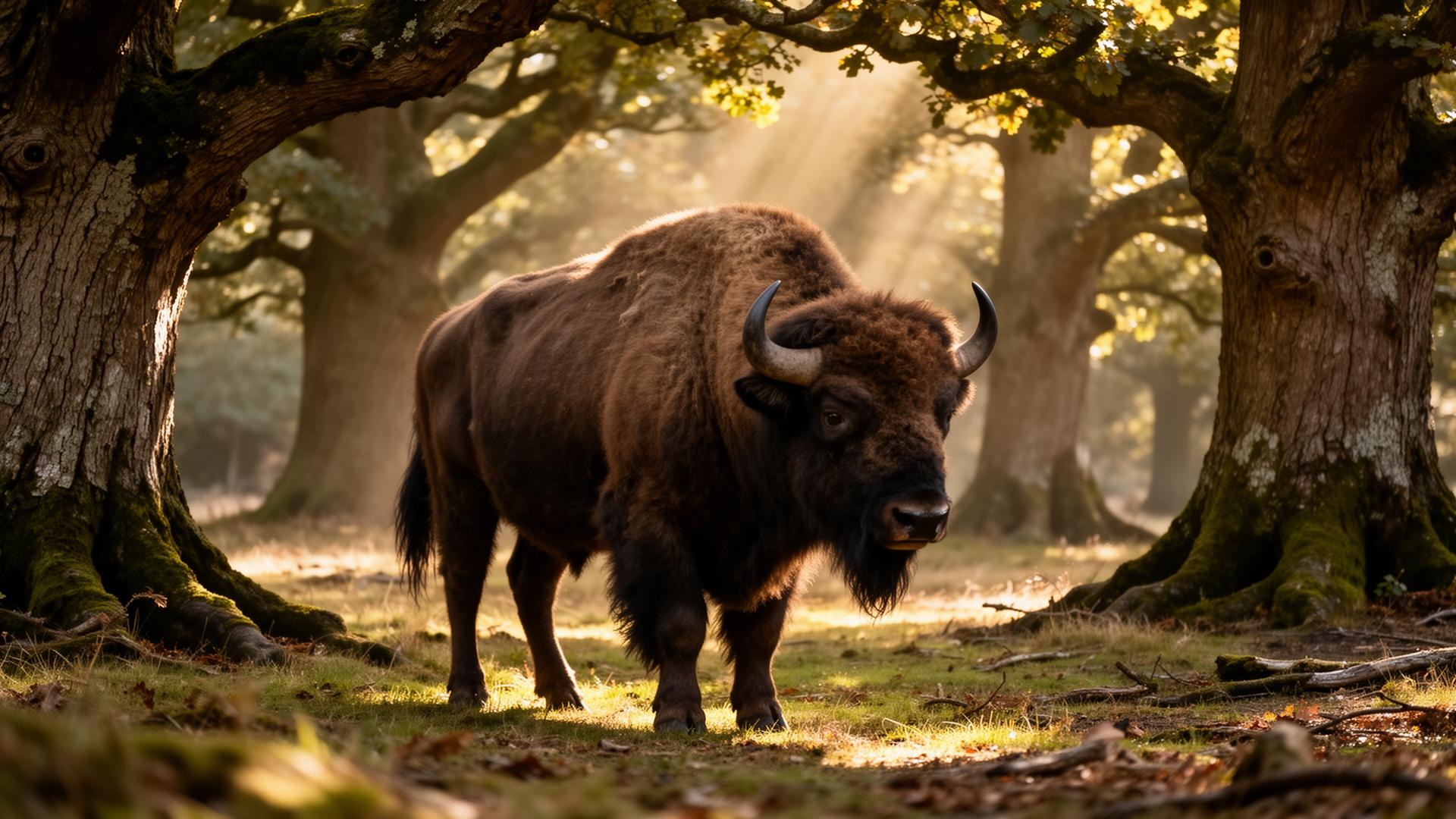
In July 2022, three European bison stepped out of a trailer and into a Kent woodland, becoming the first wild bison in Britain for at least 6,000 years. This historic moment marked a new chapter in British conservation, one where we're learning to let nature's biggest animals do the work of managing our landscapes.
The Wilder Blean project, led by Kent Wildlife Trust and Wildwood Trust, is demonstrating how these gentle giants can transform overgrown woodland into thriving, biodiverse habitat, without chainsaws or heavy machinery.
Return of the Bison
European bison (Bison bonasus) once roamed across Europe, from the Atlantic coast to the Ural Mountains. They were hunted to near-extinction in the early 20th century, with the last wild bison killed in 1927. Only 54 individuals survived in zoos.
Through careful breeding programmes, the population has recovered to over 7,000 animals across Europe. Now, they're returning to countries where they haven't lived for centuries, including the UK.
Bison Timeline
Bison last roamed wild in Britain
Last wild European bison killed in Poland
First bison released at Wilder Blean, Kent
First bison calves born in the wild in Britain
The Wilder Blean Project
Blean Woods, near Canterbury, is one of England's largest ancient woodlands. But like many British woodlands, decades of neglected management had left it dense and uniform, dominated by sweet chestnut coppice with little light reaching the forest floor.
The Wilder Blean project introduced bison alongside Exmoor ponies, Iron Age pigs, and Longhorn cattle to naturally manage the woodland. Each species has a different role:
Bison
Fell trees, strip bark, create glades, and push through dense vegetation. Their dust baths create bare ground for invertebrates.
Exmoor Ponies
Graze grassland and scrub edges, maintaining open areas and preventing woodland from completely closing over.
Iron Age Pigs
Root through the soil, disturbing ground and turning over leaf litter, creating germination sites for seeds.
Longhorn Cattle
Browse on shrubs and young trees, preventing scrub from dominating and maintaining a mosaic of habitats.
Bison as Ecosystem Engineers
Bison don't just live in the landscape; they actively shape it. Their unique behaviours create habitats that benefit hundreds of other species:
- Bark stripping: Bison strip bark from trees, creating standing deadwood that supports cavity-nesting birds and saproxylic beetles.
- Tree felling: They push over smaller trees, creating fallen deadwood and opening the canopy to light.
- Dust bathing: Bison create shallow depressions for dust baths, which become bare ground habitat for mining bees and basking reptiles.
- Path creation: Their regular routes through vegetation create natural pathways and glades.
- Dung: Bison dung supports dozens of invertebrate species, including rare dung beetles not found elsewhere.
Benefits for Biodiversity
Early results from Wilder Blean are encouraging. Within two years of bison introduction, monitoring has shown:
- Increased light reaching the woodland floor, allowing ground flora to flourish
- New populations of purple emperor butterflies attracted to the glades
- Increased bird diversity as habitat structure becomes more varied
- Rare beetles colonising deadwood created by bison activity
- Greater plant diversity as different microhabitats emerge
The project demonstrates that natural grazing can be more effective than mechanical intervention, and cheaper in the long run once the animals are established.
Future of Bison in Britain
The success at Wilder Blean has sparked interest in bison introductions elsewhere. Several estates are exploring feasibility studies, and there's growing recognition that bison could play a valuable role in managing woodland across Britain.
Challenges remain: bison require large areas, careful management, and community support. But as more people see the benefits firsthand, the vision of bison ranging across British woodlands feels increasingly achievable.
How to See Bison
Wilder Blean offers public access to the bison site through a network of walking trails. Sightings aren't guaranteed, as the bison roam freely across a large area, but many visitors are successful.
Visiting Tips
- •Timing: Early morning or late afternoon increases chances, as bison are more active in cooler temperatures.
- •Distance: Stay at least 25 metres from the bison. They may look docile but can move quickly.
- •Dogs: Dogs are not permitted in the bison area for safety reasons.
- •Guided walks: Kent Wildlife Trust offers guided experiences for a better chance of sightings.
Experience Rewilding in Wales
While we don't have bison at the Grange Project, you can experience rewilding principles in action and meet our conservation grazing animals.
Further Resources
Watch
Wilder Blean Bison - A Tour from Ranger Heidi
Watch the historic moment bison were released into the British countryside.
Wilder Blean Bison Release: The Start Of A New Era Of Conservation
Kent Wildlife Trust explains how bison are transforming Blean Woods.
Frequently Asked Questions
Are there wild bison in the UK?
Yes! In 2022, European bison were released into Blean Woods in Kent as part of the Wilder Blean project, making them the first wild bison in Britain for thousands of years. This small herd roams freely in the woodland, naturally managing the habitat through their grazing and browsing behaviour.
Are European bison dangerous?
European bison are generally not aggressive towards humans if given space and respect. They are large, powerful animals that should be observed from a distance. At Wilder Blean, the bison roam in a large enclosure with public access, and visitors are advised to stay at least 25 metres away and never approach or feed them.
What do European bison eat?
European bison are mixed feeders, eating grasses, herbs, shrubs, bark, and tree leaves. Unlike cattle, they browse extensively on woody vegetation, which makes them excellent for managing woodland habitats. They particularly enjoy hazel, willow, and bramble, and their feeding creates glades and diverse habitat structure.
How big are European bison?
European bison are the largest land mammals in Europe. Bulls can weigh up to 1,000 kg and stand 2 metres tall at the shoulder. Cows are smaller, typically weighing 300-500 kg. Despite their size, they can run at speeds of up to 35 mph when needed.
Why were bison reintroduced to the UK?
Bison were reintroduced as ecosystem engineers to naturally manage woodland habitats. Their behaviour, including bark stripping, creating dust baths, and breaking through dense vegetation, creates diverse microhabitats that benefit insects, birds, and plants. This natural approach is more sustainable than mechanical management.
Continue Reading
Stay Updated on Rewilding
Join our newsletter for the latest rewilding news, guides, and updates from The Grange Project.