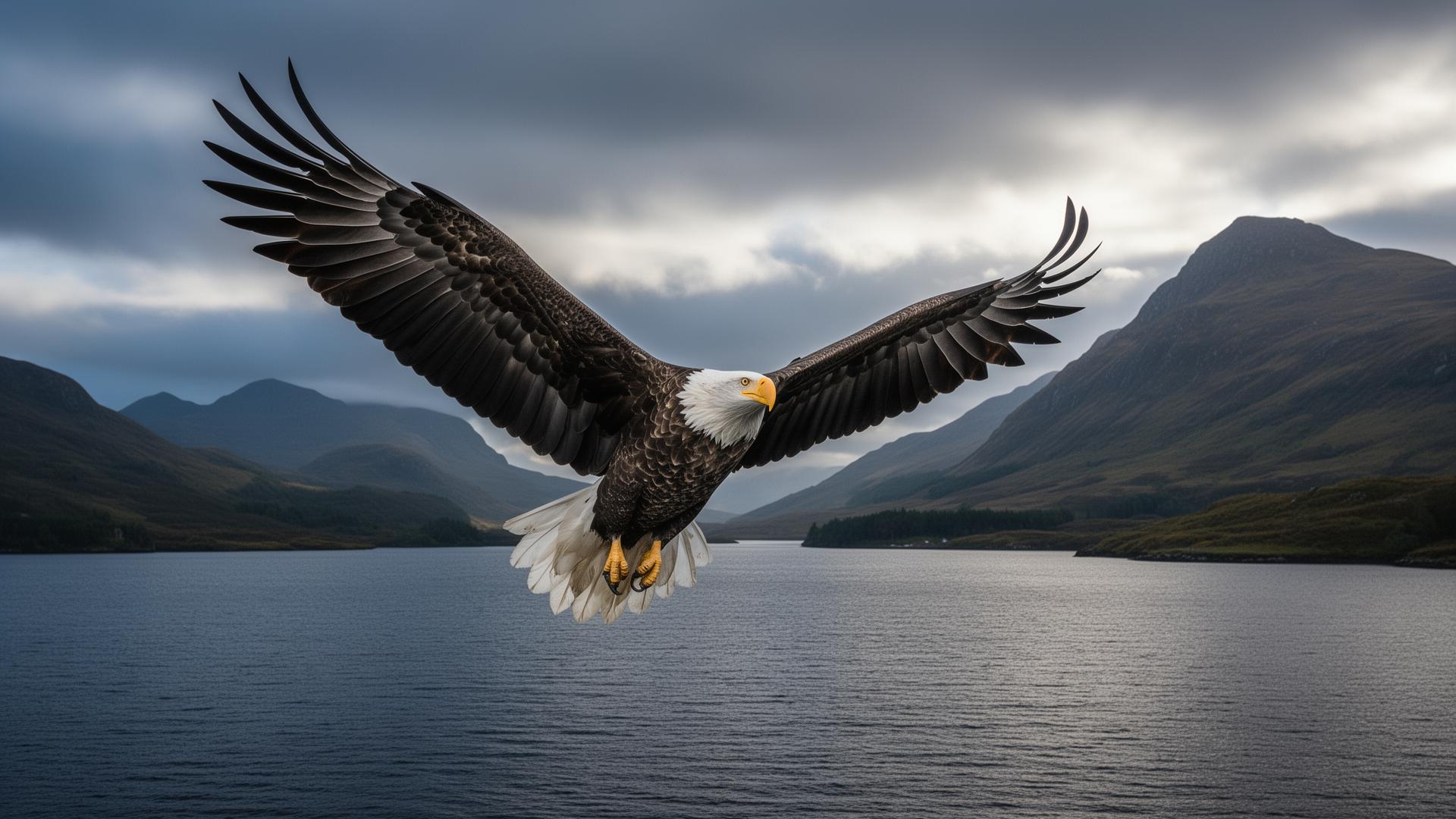
There's a reason white-tailed sea eagles are nicknamed "flying barn doors." With a wingspan of up to 2.5 metres, these magnificent birds are impossible to mistake. Once extinct in Britain, hunted out by the early 20th century, they've been brought back through one of conservation's greatest success stories.
From the Scottish isles to the Isle of Wight, sea eagles are reclaiming British skies. Here's everything you need to know about these incredible birds and where to see them.
The Flying Barn Doors
White-tailed sea eagles (Haliaeetus albicilla) are Britain's largest bird of prey and the fourth-largest eagle in the world. They're closely related to the American bald eagle and share a similar lifestyle as fish and seabird specialists.
For thousands of years, sea eagles nested on cliffs around the British coast. They were persecuted as "vermin" by farmers and gamekeepers, and the last British pair bred on Skye in 1916. By then, they were already long gone from England and Wales.
Sea Eagle Vital Statistics
- •Wingspan: 200-250 cm (6.5-8 feet)
- •Weight: Males 3.5-5 kg, females 4-7 kg
- •Lifespan: 20-25 years, up to 35 in captivity
- •Diet: Fish, seabirds, rabbits, carrion, occasionally lambs
- •Nest: Huge stick structures on cliffs or trees, reused for years
Reintroduction Success Story
The sea eagle reintroduction is one of Britain's greatest conservation achievements:
First Releases on Rum
82 young eagles from Norway were released on the Isle of Rum. Initial survival was challenging, but eventually birds began breeding.
First Breeding Success
The first sea eagle chick to fledge in Britain in 70 years was raised on Mull, launching the recovery.
Second Phase
Additional releases boosted the population and genetic diversity.
East Coast Releases
Releases in Fife aimed to establish a population on Scotland's east coast.
Isle of Wight Releases
The first English reintroduction begins, with young eagles released on the Isle of Wight.
Growing Population
Over 150 breeding pairs in Scotland, with numbers increasing annually. English birds beginning to establish.
Sea Eagle Ecology
Understanding how sea eagles live helps explain their habitat requirements:
Habitat
Sea eagles prefer coastal areas, sea lochs, and large inland lochs with good fish populations and safe nesting sites.
Hunting
They hunt from perches or soaring flight, snatching fish from near the surface or taking seabirds in flight. They're also effective scavengers.
Nesting
Huge nests built in trees or on cliff ledges, added to each year until they can weigh over a tonne and measure 2 metres across.
Territory
Pairs are territorial but ranges can overlap where food is abundant. Young birds wander widely before settling to breed.
Expanding Range
From the original reintroduction on Rum, sea eagles have spread across western Scotland:
- Isle of Mull: The stronghold, with multiple breeding pairs and the famous Mull Eagle Watch.
- Skye: Breeding pairs re-established where the last British eagles nested.
- Outer Hebrides: Growing population on multiple islands.
- West coast mainland: Pairs now breeding from Argyll to Sutherland.
- East coast: Pairs establishing from the Fife releases.
Young birds have been spotted across Britain, from Cornwall to Norfolk, as they explore potential future territories.
Sea Eagles in England
The Isle of Wight Sea Eagle Project began releasing young eagles in 2019, marking the first English reintroduction. The project aims to establish a breeding population in southern England.
Early results are promising:
- Multiple years of releases have established a group of birds in the area.
- Birds are being seen across southern England as they explore.
- The first English breeding in centuries is anticipated within a few years.
- A pair has already attempted nesting, though not yet successfully.
The return of sea eagles to English skies represents the completion of a vision that began nearly 50 years ago.
Where to Watch Sea Eagles
Best Locations
- •Isle of Mull, Scotland: The most reliable location. Boat trips, and the Mull Eagle Watch hide at a nest site.
- •Skye, Scotland: Good chances around the coast, especially near Portree.
- •Loch Lomond: Eastern birds sometimes seen here.
- •Isle of Wight: Growing population, sightings becoming more regular.
The best way to see sea eagles on Mull is a boat trip from places like Tobermory or Ulva Ferry, where operators know the territories and can almost guarantee sightings. For the most intimate experience, book the Mull Eagle Watch hide during the breeding season.
Explore British Wildlife
While sea eagles haven't reached Wales yet, the Grange Project offers wonderful wildlife encounters in a rewilding landscape.
Further Resources
Watch
The Return of White-tailed Eagles to England | Forestry England
Stunning footage of sea eagles hunting and soaring.
England's White-tailed Eagles Return | Forestry England
The Isle of Wight reintroduction project explained.
Frequently Asked Questions
Where can I see sea eagles in the UK?
The Isle of Mull in Scotland is the most reliable location, with boat trips and land-based hides offering excellent viewing. Sea eagles can also be seen on Skye, the west coast of Scotland, the Outer Hebrides, and increasingly on the Isle of Wight where a new population is establishing.
How big are white-tailed sea eagles?
White-tailed sea eagles are Britain's largest bird of prey, with a wingspan of up to 2.5 metres (8 feet). They can weigh up to 7 kg, with females larger than males. Their 'barn door' profile in flight and distinctive white tail (in adults) make them unmistakable.
Do sea eagles take lambs?
This is controversial. Sea eagles primarily eat fish, seabirds, and carrion. However, some do take lambs, particularly on Scottish islands. Research suggests most lamb predation involves already-dead or dying lambs, but some healthy lambs are taken. Compensation schemes exist for proven losses.
When were sea eagles reintroduced to Britain?
The first reintroduction began in 1975 on the Isle of Rum in Scotland, using Norwegian birds. After initial challenges, the programme succeeded and sea eagles now breed across western Scotland. A second reintroduction on the east coast began in 2007, and releases on the Isle of Wight started in 2019.
What's the difference between sea eagles and golden eagles?
Sea eagles (white-tailed eagles) are larger with broader, 'fingered' wings, a shorter, wedge-shaped tail, and a massive pale beak. Adults have white tails. Golden eagles are smaller, darker overall, with a golden nape, and have proportionally longer tails. They prefer upland areas while sea eagles favour coasts and lochs.
Continue Reading
Stay Updated on Rewilding
Join our newsletter for the latest rewilding news, guides, and updates from The Grange Project.