Overview
Coetir Anian was founded in 2007 with the aim of owning and managing areas of land in Wales, including at least one large area. It is a Charitable Incorporated Organisation, charity number 1158185, and was previously registered as the Wales Wild Land Foundation. Cambrian Wildwood is the English working name for both the charity and its flagship land project, and the two names are used interchangeably.
If Tir Natur is the new arrival in Welsh rewilding, Cambrian Wildwood is the one that has been at it longest. It took ten years from founding to securing land, and the work since has been patient rather than dramatic: blocking drains, letting trees find their own way, and watching what happens.
Its director is Katy Harris. Simon Ayres, a professional forester and a founder member, remains involved as a volunteer and trustee.
Bwlch Corog
Bwlch Corog covers 350 acres, or 140 hectares, near the village of Glaspwll, about three miles from Machynlleth in Ceredigion, within the Dyfi catchment. The Woodland Trust bought the freehold in May 2017 with funding from the Waterloo Foundation, and Coetir Anian holds it on a 125-year lease. The land was previously part of Cefn Coch.
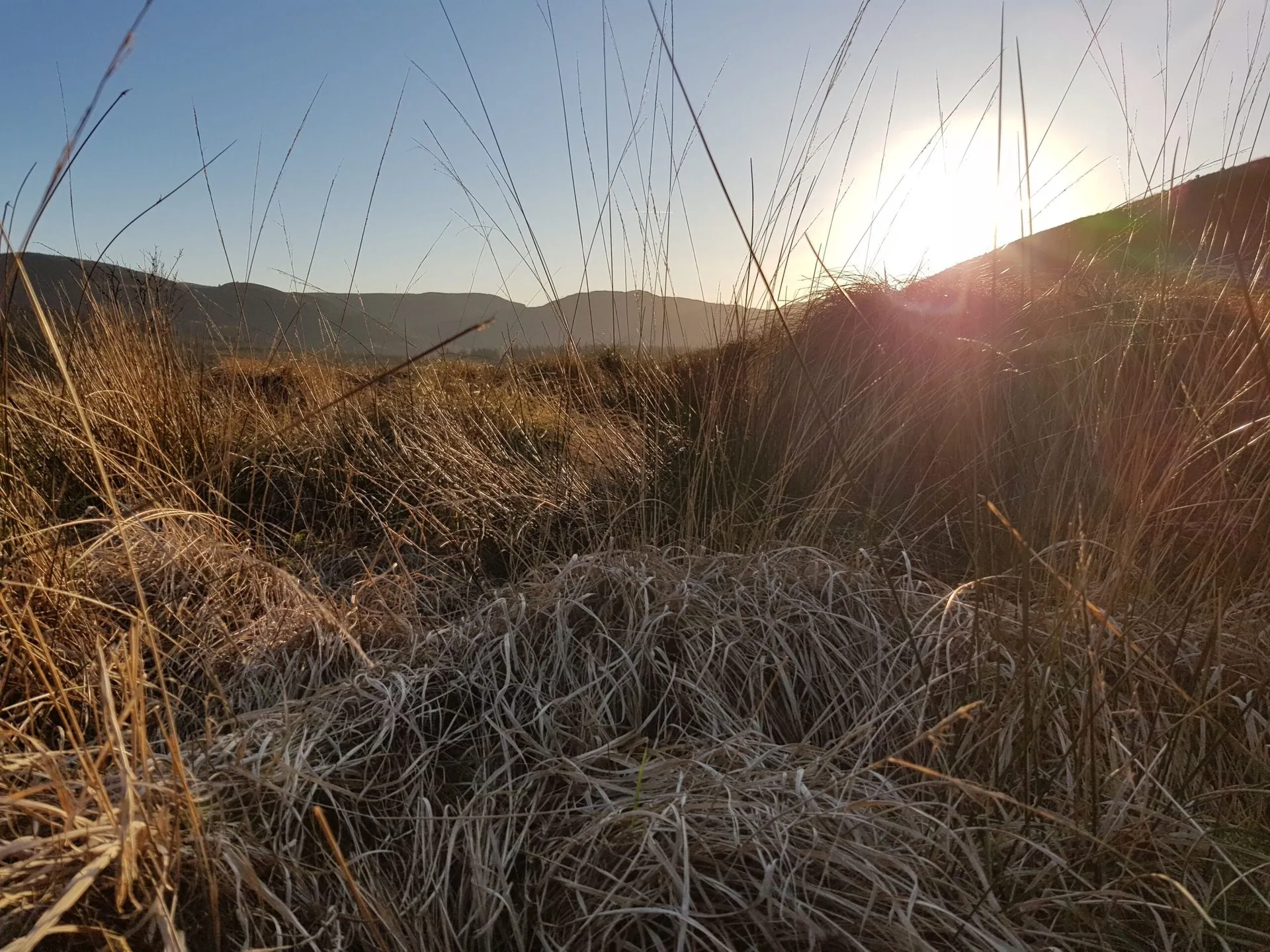
There are three habitats, deliberately not treated as separate compartments. Woodland in the river gorge and on the lower slopes, including about 4 hectares of ancient woodland at Coed Llechwedd Einion and around 10 hectares of woodland in total. Blanket bog and upland heath across roughly 120 hectares of higher ground, separated by peat depth and how wet they are. Pollen records show that lime, wych elm, pine and beech once grew there.
Undoing the Drainage
The defining problem at Bwlch Corog is 1930s drainage. Around 11 km of grips were cut into the peat, and the upland is now dominated by purple moor grass as a result. In 2019 the charity blocked the grips with peat dams spaced every 10 metres. It says this created over a thousand small ponds across the site, which is its own count rather than a surveyed figure.
The approach from there is to wait. Scarification and sowing heather seed are described as possibilities, but the charity says it prefers to take a long view and minimise further intervention. Its published position is that management is minimal to allow the site to evolve naturally, and it sets no preset targets.
Horses, Cattle and Bracken
A herd of Konik horses has been on the land since 2018, when three mares arrived in April and two more mares and a stallion followed in June, given free of charge from herds in Ceredigion and Sussex. Five foals have been born since. Highland and Welsh White cattle graze in summer.
Tree planting has been done without fencing. Small groups or single trees are placed where browsing animals cannot easily reach them, in locations identified by watching where the horses habitually graze. Temporary fencing is used only on small patches. Of the 8,000 native trees planted, most were grown from seed collected at Bwlch Corog itself, and they are intended as future seed sources rather than as a wood.
Bracken is controlled without pesticides, which takes three or more consecutive years to weaken it: rolling with a cylinder drawn by working horses, scything, slashing with grass hooks, strimming, and autumn cattle grazing.
What Has Come Back
Two hundred and seventy six moth species have now been recorded at Bwlch Corog. In summer 2025, after three years of targeted survey with pheromone lures, five male Welsh Clearwing moths were found on birch in old hedges at two locations on the site boundary. The species is known from only a few Welsh sites. Roe deer, otters and hen harriers are also recorded.
The charity's strategic plan commits it to investigating the feasibility of reintroducing water voles, red squirrels, pine martens and black grouse. It is explicit that large carnivores are out of scope, saying that reintroduction of bear, wolf or lynx is well beyond what it is doing.
The Education and Wellbeing Work
This is the part of Cambrian Wildwood that has no real equivalent among the other organisations on this hub, and it is worth setting out properly. The Primary Schools Programme runs over three years with the same children: a day on site in year one learning about habitats, a follow-up visit to plant acorns, a creative art project, bushcraft in year two, and a return in year three to plant the oaks grown from their own acorns.
Youth Camps are five-day residentials with no phones or digital devices, for six groups a year drawn from secondary schools and youth support networks. All camping equipment is provided so that no student is excluded on cost grounds. Nature Ambassadors is a six-week programme for secondary students facing barriers to mainstream education. Wild Days Out, funded by Powys County Council, runs days for local children.
Open Door Camps are designed for people going through difficult periods in their lives, including people in recovery, asylum seekers and young carers. The charity has a long-running relationship with Wolverhampton Quakers and other Wolverhampton charities working with asylum seekers, whose volunteers have planted trees, removed Sitka spruce and carried out plant and wildlife surveys on site.
Visiting and Volunteering
Bwlch Corog is open to the public and free to roam, with no admission charge and no opening hours. Dogs are welcome but must be on a lead because of the cattle and semi-wild horses. Wild camping is permitted on leave-no-trace terms, except on dates when groups are being hosted.
Practical volunteer days run twice a month, on the middle Thursday and the last Saturday, meeting at Bwlch Corog by 10am and finishing around 4pm, with lifts from Machynlleth available on request. Support routes include donating, the Cambrian Wildwood Founders scheme, gifts in wills and corporate partnership. Visit cambrianwildwood.org to donate or get involved.
Further Resources
Watch
All about Cambrian Wildwood
The charity's own introduction to Coetir Anian and the work at Bwlch Corog.
Learn More
Bwlch Corog
Cambrian WildwoodThe charity's own account of the land and the work done on it.
Coetir Anian on the charity register
Charity CommissionAccounts, trustees and governance for charity 1158185.
Preliminary invertebrate survey of Bwlch Corog
Cambrian WildwoodPrimary ecological survey evidence from the site, published in full.
Frequently Asked Questions
What is the difference between Cambrian Wildwood and Coetir Anian?
They are the same organisation. Coetir Anian is the registered charity name, number 1158185, and Cambrian Wildwood is the English working name and the name of the land project. The charity was previously registered as the Wales Wild Land Foundation.
Where is Cambrian Wildwood and can I visit?
At Bwlch Corog, near Glaspwll, about three miles from Machynlleth in Ceredigion. It is open to the public and free to roam, with no admission charge and no opening hours. Dogs must be on leads because of cattle and semi-wild horses, and wild camping is allowed on leave-no-trace terms.
How big is Cambrian Wildwood and who owns it?
350 acres, or 140 hectares. The Woodland Trust bought the freehold in May 2017 and the charity holds it on a 125-year lease.
What animals live at Cambrian Wildwood?
A herd of Konik horses, present since 2018, and Highland and Welsh White cattle that graze in summer. Recorded wildlife includes roe deer, otters, hen harriers and 276 moth species, among them the rare Welsh Clearwing, confirmed on site in summer 2025.
Continue Reading
Stay Updated on Rewilding
Join our newsletter for the latest rewilding news, guides, and updates from The Grange Project.