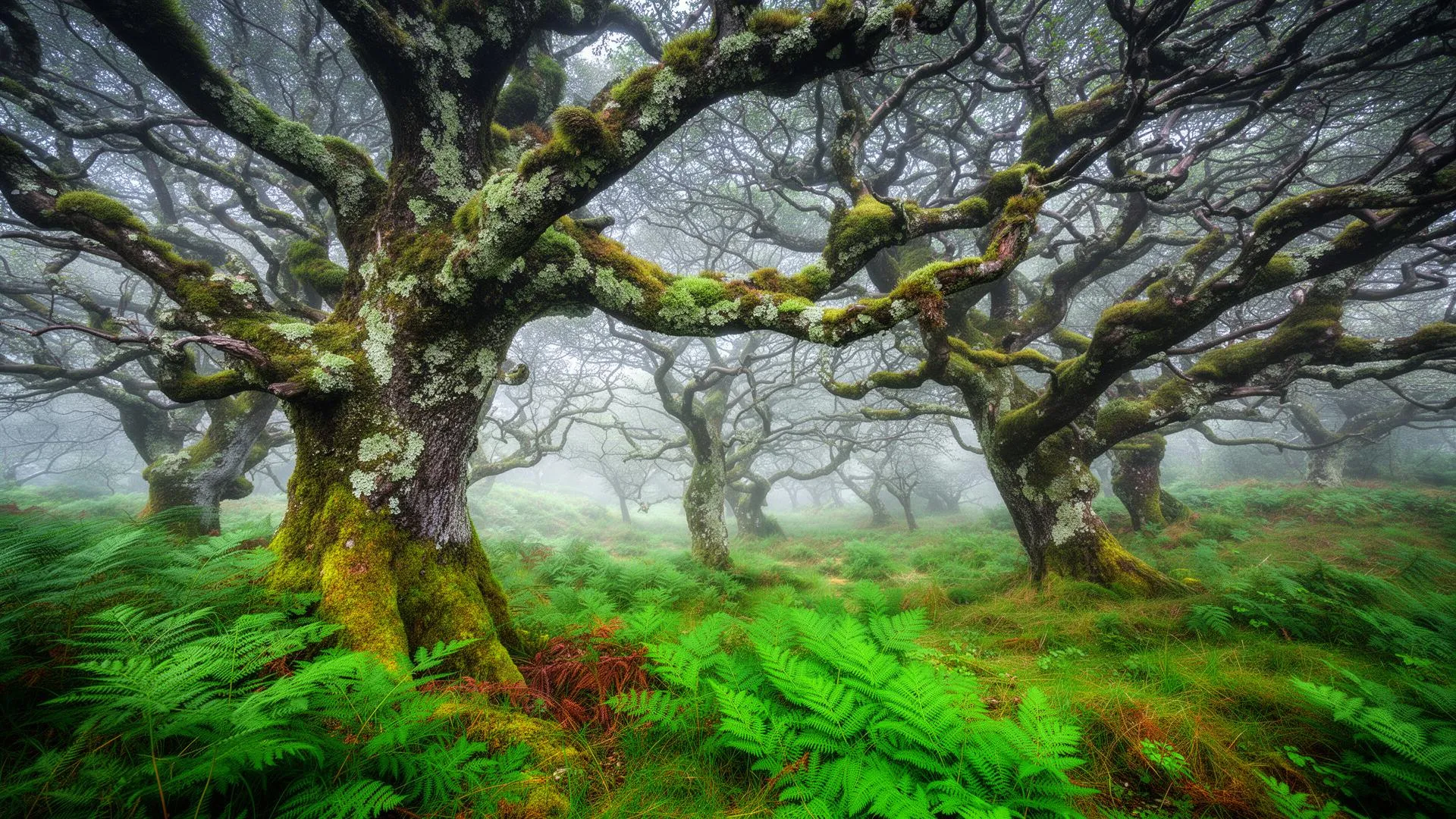
When most people think of rainforest, they picture tropical jungles. But Britain has its own rainforest—and it's one of the rarest habitats on Earth. Celtic rainforest, found along our wet western coasts, is a magical world of ancient oaks draped in mosses, lichens, and ferns, where rainfall and humidity create conditions found in only a handful of places worldwide.
Less than 1% of this habitat remains in Britain. What survives is internationally important, home to species found nowhere else and a living window into primeval landscapes. Now, after centuries of neglect, efforts are underway to save and restore these extraordinary woodlands.
What is Celtic Rainforest?
Celtic rainforest—also called Atlantic or temperate rainforest—is woodland that exists in oceanic climates with high rainfall (typically over 1,500mm per year), mild temperatures, and persistent humidity. These conditions create an environment where the trees themselves become hosts for extraordinary communities of epiphytes: mosses, liverworts, lichens, and ferns that clothe every surface.
Key Characteristics
- • Ancient, often twisted oak trees
- • Dense covering of mosses and liverworts
- • Rich lichen communities on bark and rock
- • Fern-covered ground and rocky outcrops
- • High humidity year-round
- • Rainfall exceeding 1,500mm annually
Global Rarity
Temperate rainforest is rarer than tropical rainforest, covering less than 1% of the Earth's surface. Britain's Celtic rainforest is part of a fragmented chain running from Norway to Portugal. Together with similar habitats in Chile, New Zealand, and the Pacific Northwest, these are among the most threatened forest types on Earth.
The term "Celtic rainforest" reflects its distribution along the Atlantic fringe of Britain and Ireland—the Celtic nations. Here, the Gulf Stream brings mild, wet air that sustains these green, living landscapes throughout the year.
Where to Find Celtic Rainforest
Scotland
Scotland holds the largest remaining Celtic rainforest in Britain, concentrated along the western seaboard from Argyll to Wester Ross. Key areas include:
- Argyll Oakwoods – the heartland of Scottish rainforest, including Taynish NNR and Glen Nant
- Sunart Oakwoods – one of the largest Atlantic oakwoods in Britain
- Loch Lomond and the Trossachs – accessible rainforest on the southern fringe
- Wester Ross – remote fragments in spectacular Highland scenery
Wales
Wales is estimated to hold around 30,000 hectares of rainforest zone, though much is degraded. The best examples include:
- Snowdonia – Coed Felenrhyd, Coed Crafnant, and the Nant Gwynant valley
- Cambrian Mountains – fragmented woods along the central Welsh spine
- Pembrokeshire – coastal oakwoods with oceanic lichen communities
- Powys – upland woods like Cwm Clydach and the Elan Valley
England
English rainforest is confined to the wettest parts of the southwest:
- Dartmoor – including the famous Wistman's Wood and Black Tor Copse
- Exmoor – ancient oakwoods in steep valleys
- Cornwall – coastal valleys and the Luxulyan Valley
- Lake District – fragmentary rainforest on the western fells
The Biodiversity Hotspot
What makes Celtic rainforest so special isn't the trees themselves—it's everything living on them. These woodlands support some of Britain's richest concentrations of biodiversity:
Lichens
Britain's Atlantic oakwoods are internationally important for lichens. The stable, humid conditions allow slow-growing species to thrive, some taking centuries to mature. Notable species include:
- Lungwort lichens (Lobaria) – indicator species for ancient woodland
- String-of-sausages lichen – critically endangered, confined to the wettest sites
- Oceanic lichens – species found only in Atlantic Europe, some endemic to Britain
Mosses and Liverworts
Over 300 species of bryophytes can be found in British Celtic rainforest. The constant humidity allows these moisture-dependent plants to carpet trees, rocks, and ground, creating the characteristic "green fur" of these woodlands.
Wildlife
- Pine martens – recovering and thriving in Scottish and Welsh rainforests
- Red squirrels – found in more isolated western woodlands
- Wood warblers and pied flycatchers – summer migrants breeding in the canopy
- Redstarts – flashy woodland birds favouring old trees
- Purple hairstreak butterflies – oak-dependent species
- Rare invertebrates – including the blue ground beetle in Snowdonia
Threats and Decline
Less than 1% of Britain's original Celtic rainforest remains. Understanding the threats is key to reversing this decline:
Overgrazing
Sheep and deer prevent woodland regeneration, eating seedlings before they can establish. Without new trees, the canopy cannot renew itself, and remaining trees grow old without successors.
Invasive Rhododendron
Rhododendron ponticum thrives in the wet, mild conditions that suit rainforest. Its dense, evergreen growth shades out native species and creates conditions hostile to regeneration. Removing it is expensive and labour-intensive.
Air Pollution
Lichens are extremely sensitive to air quality. Nitrogen pollution from agriculture and traffic favours common, nitrogen-tolerant species while rare, slow-growing Atlantic lichens decline.
Fragmentation
Remaining rainforest exists in small, isolated fragments. Species dependent on humidity struggle to disperse between sites, and edge effects penetrate small woods.
Climate Change
While increased rainfall might seem beneficial, more extreme weather, summer droughts, and shifting seasons could stress these moisture-dependent ecosystems.
Restoration Efforts
After decades of decline, Celtic rainforest is finally receiving attention. Restoration projects across Britain are working to save and expand this precious habitat:
Scotland
The Alliance for Scotland's Rainforest brings together conservation organisations to tackle threats across the whole rainforest zone. Work includes removing rhododendron from thousands of hectares, reducing deer numbers, and planting native trees to connect fragments.
Wales
The Celtic Rainforests Wales project is restoring and connecting rainforest sites across the country. Working with farmers and landowners, the project removes invasive species, erects deer fencing, and plants native trees grown from local seed.
England
In southwest England, organisations including the Woodland Trust andDartmoor National Park are working to protect and expand remaining rainforest. Wistman's Wood on Dartmoor has new fencing to reduce grazing and allow regeneration.
How You Can Help
- • Support organisations working on rainforest restoration
- • Volunteer for rhododendron clearance or tree planting
- • Visit responsibly, sticking to paths to protect fragile ground flora
- • Reduce nitrogen emissions to protect sensitive lichens
- • Spread awareness of this overlooked habitat
Visiting Celtic Rainforest
Experiencing Celtic rainforest is unforgettable. The dripping, green atmosphere feels utterly otherworldly. Here are some of the best places to visit:
Wistman's Wood, Dartmoor
Perhaps England's most famous rainforest fragment. Ancient, stunted oaks grow from boulder fields, draped in moss and ferns. Accessible via a 2-mile walk from Two Bridges.
Coed Felenrhyd, Snowdonia
A magical Welsh rainforest with boardwalks through moss-draped oaks. One of the best examples of Atlantic oakwood in Wales, managed by Coed Cadw (Woodland Trust Wales).
Taynish NNR, Argyll
Scotland's most southerly rainforest, with over 300 species of lichen. Trails wind through ancient oaks to the Linne Mhuirich shore.
Borrowdale, Lake District
England's wettest valley contains rainforest fragments on the steep valley sides. National Trust sites like Johnny Wood are easily accessible.
Visiting Tips
- •Wet weather gear: Rain is essential for rainforest—embrace it! Waterproofs and good boots are essential.
- •Look closely: The magic is in the details—bring a hand lens to appreciate lichens and mosses.
- •Stay on paths: Fragile ground flora is easily damaged by trampling.
- •Best seasons: Late autumn through spring when the air is dampest and lichens are most vibrant.
Explore Wales's Rainforest Country
Stay at the Grange Project and explore the Celtic rainforests of Powys and beyond. Experience ancient woodland on our doorstep.
Further Resources
Watch
The Lost Rainforests of Britain | Guy Shrubsole
Journalist and author Guy Shrubsole explores Britain's forgotten temperate rainforests.
Scotland's Rainforest | Saving Scotland's Rainforest
How conservation efforts are restoring Scotland's Atlantic woodland.
Learn More
Woodland Trust - Celtic Rainforest
Woodland TrustInformation about Britain's temperate rainforest and conservation efforts.
Alliance for Scotland's Rainforest
Alliance for Scotland's RainforestPartnership working to restore Scotland's Atlantic rainforest.
Celtic Rainforests Wales
Celtic Rainforests WalesProject restoring and connecting Wales's temperate rainforest.
Frequently Asked Questions
What is Celtic rainforest?
Celtic rainforest, also known as Atlantic or temperate rainforest, is a rare woodland habitat found along Britain's wet western coasts. Characterised by ancient oaks draped in luxuriant mosses, liverworts, lichens, and ferns, these woodlands thrive where rainfall exceeds 1,500mm annually and humidity remains high year-round. They're remnants of forests that once covered much of Atlantic Europe.
Where can I see Celtic rainforest in the UK?
The best examples are found in western Scotland (including Argyll, Lochaber, and Wester Ross), Wales (especially Snowdonia, the Cambrian Mountains, and Pembrokeshire), and southwest England (Dartmoor, Exmoor, and Cornwall). Key sites include the Atlantic Oakwoods of Argyll, the Coed Felenrhyd reserve in Wales, and Wistman's Wood on Dartmoor.
Why is Celtic rainforest so rare?
Only about 1% of Britain's original Celtic rainforest remains. Centuries of clearance for grazing, charcoal production, and timber have reduced these woodlands to fragments. Ongoing threats include overgrazing by sheep and deer, invasive rhododendron, air pollution affecting lichens, and climate change. Many remaining fragments are too small and isolated to sustain their full biodiversity.
What wildlife lives in Celtic rainforest?
These forests support extraordinary biodiversity including rare lichens like the lungwort and tree lungwort, over 300 species of bryophytes (mosses and liverworts), and ferns including the rare Tunbridge filmy-fern. Wildlife includes pine martens, red squirrels, wood warblers, pied flycatchers, and redstarts. The lichen communities are internationally important and include species found nowhere else on Earth.
How can Celtic rainforest be restored?
Restoration involves removing invasive species (particularly rhododendron), reducing deer and sheep grazing to allow regeneration, planting native trees to expand and connect fragments, and improving air quality. Projects like Woodland Trust's Atlantic rainforest restoration, Trees for Life in Scotland, and local initiatives in Wales are working to expand this precious habitat.
Continue Reading
Stay Updated on Rewilding
Join our newsletter for the latest rewilding news, guides, and updates from The Grange Project.