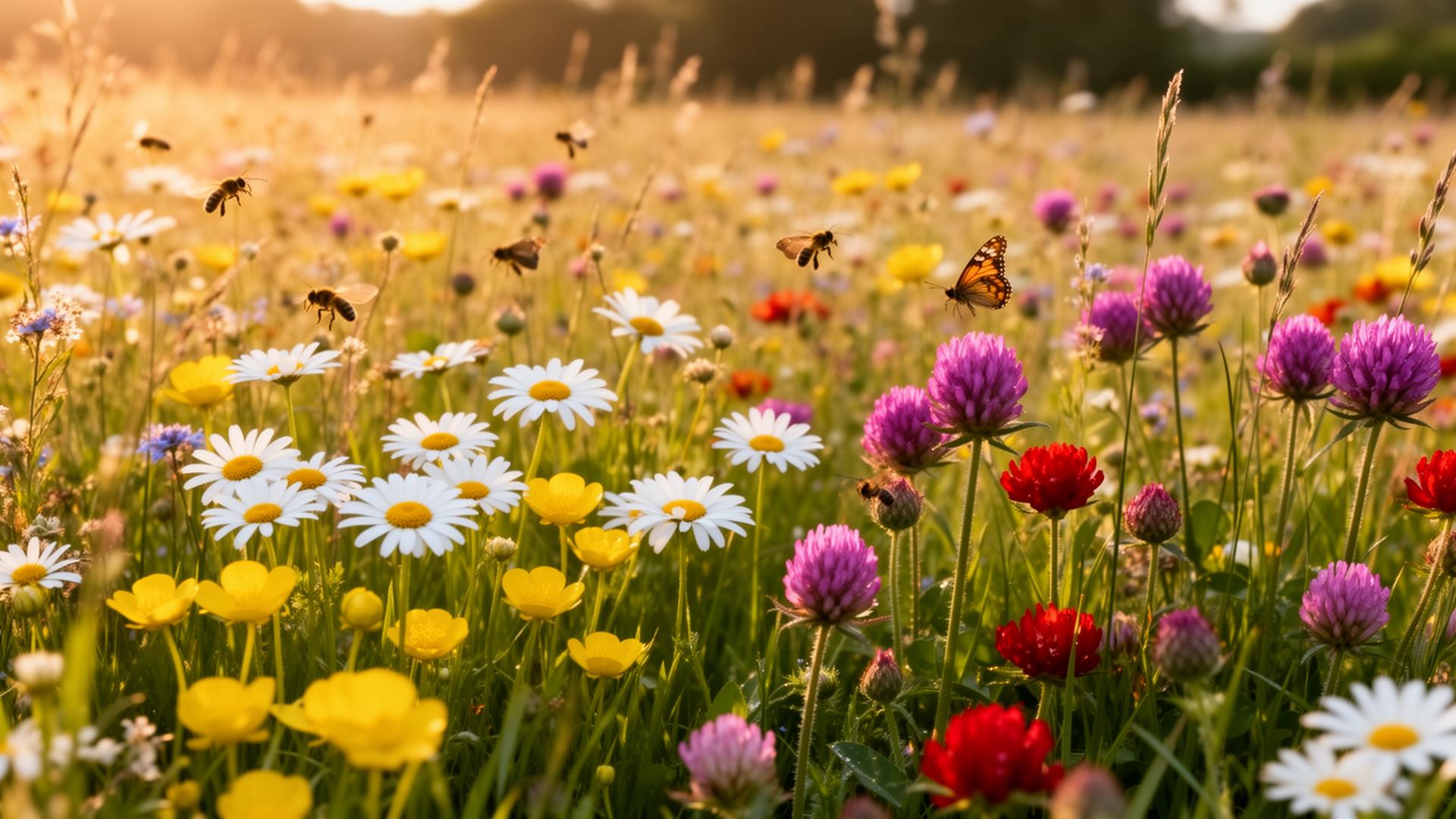
Picture a summer meadow: knee-high grasses swaying in the breeze, splashed with the yellow of buttercups, the white of oxeye daisies, the purple of knapweed. Bees hum, butterflies dance, and skylarks sing overhead. This scene, once common across Britain, has become devastatingly rare.
Since the 1930s, we've lost 97% of our wildflower meadows. What remains is more precious than rainforest. But there's hope: across the country, meadows are being restored—and you can create one yourself.
The Lost Meadows of Britain
Before the Second World War, hay meadows were everywhere. They were fundamental to farming: cut once in summer for hay, grazed by livestock in autumn and winter, and left to flower each spring. This centuries-old management created extraordinarily diverse grasslands, with some meadows containing over 100 plant species.
Then came agricultural intensification. Government policy encouraged farmers to plough ancient meadows and reseed with fast-growing ryegrass, which produced higher yields and allowed more cuts per year, maximising productivity for silage-fed livestock. Artificial fertilisers boosted grass growth but killed wildflowers. Earlier cutting destroyed nests and prevented seeding. Herbicides eliminated "weeds", including the wildflowers that had thrived for centuries.
The Numbers
- • 97% of wildflower meadows lost since the 1930s
- • 7.5 million acres reduced to just 200,000 acres
- • Species-rich grassland now covers less than 1% of the UK
- • One species per year lost from average grassland since 1950
What took centuries to develop, the slow accumulation of species, the complex web of relationships between plants, pollinators, and soil organisms—was largely destroyed in just a few decades.
Types of Meadow
Not all meadows are the same. Different soil types, regions, and management histories create distinct meadow communities:
Lowland Hay Meadows
The classic meadows of central England, cut for hay in July. Rich in species like great burnet, meadow crane's-bill, and pepper saxifrage. Now extremely rare.
Upland Hay Meadows
Found in the Pennines and other uplands, these meadows are cut later (August) and contain wood crane's-bill, melancholy thistle, and globeflower. Some of the best examples survive in the Yorkshire Dales.
Water Meadows
Meadows on river floodplains, traditionally flooded in winter to promote early grass growth. Support fritillaries, cuckooflower, and ragged robin.
Chalk & Limestone Grassland
Thin soils over chalk or limestone support distinctive communities including pyramidal orchid, clustered bellflower, and rockrose. Often grazed rather than cut.
Acid Grassland
On poorer, acidic soils, heathers, tormentil, and heath bedstraw mix with grasses. Found on heathland fringes and upland margins.
Coastal Grassland
Salt-tolerant species like thrift, sea campion, and kidney vetch thrive on clifftops and machair (shell-sand grassland in Scotland).
Wildlife of the Meadow
A species-rich meadow is one of the most biodiverse habitats in Britain, supporting extraordinary communities of invertebrates, birds, and mammals:
Pollinators
- Over 20 butterfly species can use a single good meadow
- Bumblebees – meadows provide season-long pollen and nectar
- Solitary bees – hundreds of species nest in grassland soils
- Hoverflies – essential pollinators and aphid predators
- Moths – burnet moths, cinnabar moths, and hundreds more
Birds
- Skylark – the quintessential meadow bird, now red-listed
- Meadow pipit – ground-nesting bird of open grassland
- Yellow wagtail – beautiful meadow specialist in severe decline
- Barn owl – hunts voles in meadow margins
- Curlew – breeds in wet meadows and upland grassland
Other Wildlife
- Harvest mice – tiny mammals nesting in tall grass stems
- Grass snakes – hunting in meadow edges
- Slow worms – common in undisturbed grassland
- Field voles – abundant, supporting predators
- Brown hares – iconic grassland mammals
Meadow Restoration
Across Britain, farmers, conservation groups, and landowners are bringing meadows back. Restoration can take different approaches:
Reducing Fertility
The biggest barrier to meadow restoration is over-fertile soil. Years of fertiliser application favour aggressive grasses over wildflowers. Cutting and removing hay (rather than grazing) gradually depletes nutrients. This can take 10-20 years.
Yellow Rattle
This native annual is parasitic on grass roots, weakening them and creating gaps for wildflowers to establish. Sowing yellow rattle is often the first step in converting grass fields to meadow.
Green Hay
Cutting hay from an existing wildflower meadow and spreading it on a restoration site transfers seeds, and the fungi and bacteria they need. This creates meadows much faster than sowing seed alone.
Ongoing Management
Meadows need management to persist. Traditional hay cutting (late July onwards) and aftermath grazing in autumn maintains species diversity. Without management, meadows become dominated by rank grasses and eventually scrub.
Creating Your Own Meadow
Whether you have a small garden or a larger plot, you can create valuable meadow habitat:
Step 1: Assess Your Site
Check your soil type (acid, neutral, or alkaline) and existing vegetation. Poor soil is actually an advantage—meadows thrive where grasses struggle.
Step 2: Prepare the Ground
On fertile sites, either strip existing turf (creating bare soil) or start by reducing fertility over several years by cutting and removing all vegetation. Never add fertiliser or compost.
Step 3: Sow or Plant
Use native wildflower seed appropriate for your soil type and region. Sow in autumn or early spring. Include yellow rattle to suppress grasses. Alternatively, plant plug plants into existing grassland.
Step 4: Manage Appropriately
In the first year, cut frequently to control weeds. This prevents vigorous weeds like docks, thistles, and nettles from outcompeting slower-establishing wildflowers. Thereafter, cut once in late summer after flowers have seeded. Always remove cuttings to keep fertility low. Leave some areas uncut until spring for overwintering invertebrates.
Even a Small Patch Helps
You don't need acres. A few square metres of wildflower meadow in a garden provides valuable nectar and pollen for pollinators. Letting part of a lawn grow and flower during "No Mow May" is a great start.
Where to See Meadows
Despite massive losses, some spectacular meadows survive and are open to visitors:
North Meadow, Wiltshire
Home to 80% of Britain's snakeshead fritillaries, best seen in late April. A rare surviving Lammas meadow with traditional commoners' rights.
Muker Meadows, Yorkshire Dales
Classic upland hay meadows with wood crane's-bill and melancholy thistle. Peak flowering in July. Part of a network of surviving Dales meadows.
Knepp Estate, Sussex
Former farmland reverting to wildness, with extraordinary grassland diversity developing naturally alongside scrub and woodland.
Great Dixter, East Sussex
Christopher Lloyd's famous garden includes species-rich meadow areas showing how meadows can integrate into designed landscapes.
The Coronation Meadows project has identified flagship meadows in every county—search online to find one near you.
Experience Meadow Restoration
At the Grange Project, we're restoring an area as a wood meadow: a combination of sparse, scattered trees and species-rich grassland. Visit to see wildflowers returning and learn about meadow management.
Further Resources
Watch
How to Grow a Wildflower Meadow | Plantlife
Official Plantlife guide to creating species-rich grassland from scratch.
How to Create a Meadow | Plantlife with Matt Pitts
Expert meadows specialist Matt Pitts shares practical step-by-step guidance on meadow creation and restoration.
Learn More
Plantlife Meadows Hub
PlantlifeResources on meadow conservation, creation, and road verge management.
Wildlife Trusts – Wildflower Meadows
The Wildlife TrustsGuide to lowland meadow habitats and their conservation.
RHS – Create a Wildflower Meadow
Royal Horticultural SocietyStep-by-step guide to creating wildflower areas in gardens.
Frequently Asked Questions
Why have wildflower meadows declined in the UK?
Britain has lost 97% of its wildflower meadows since the 1930s. The main causes are agricultural intensification: reseeding with productive grass varieties, heavy use of fertilisers and herbicides, earlier and more frequent cutting, and conversion to arable land. What took centuries to develop was largely destroyed in a few decades of post-war farming.
How do I create a wildflower meadow?
The key is reducing soil fertility—wildflowers thrive in poor soils where grasses can't dominate. Remove existing turf, don't add fertiliser, and sow a mix of native wildflowers and grasses suited to your soil type. Alternatively, introduce yellow rattle (a grass parasite) into existing grassland and stop fertilising. Mow in late summer after flowers have set seed, and remove the cuttings.
What flowers grow in traditional hay meadows?
Traditional hay meadows contain dozens of wildflower species including oxeye daisy, red clover, bird's-foot trefoil, meadow buttercup, knapweed, yellow rattle, meadow vetchling, meadowsweet, betony, and many grasses. The exact mix depends on soil type, region, and management history. A good meadow might contain 30-40 plant species per square metre.
When is the best time to see wildflower meadows?
Peak flowering is typically June and July for traditional hay meadows. However, the season extends from April (cowslips, early orchids) through to September (knapweeds, devil's-bit scabious). Different meadow types peak at different times—water meadows often flower earlier, while upland hay meadows may peak in late July.
Why are meadows important for wildlife?
Meadows support extraordinary biodiversity. A healthy meadow might contain over 100 plant species, supporting hundreds of insect species including butterflies, bees, hoverflies, and beetles. These in turn feed birds and bats. Ground-nesting birds like skylarks and meadow pipits depend on grassland. Meadows also store carbon and prevent flooding when managed traditionally.
Continue Reading
Stay Updated on Rewilding
Join our newsletter for the latest rewilding news, guides, and updates from The Grange Project.