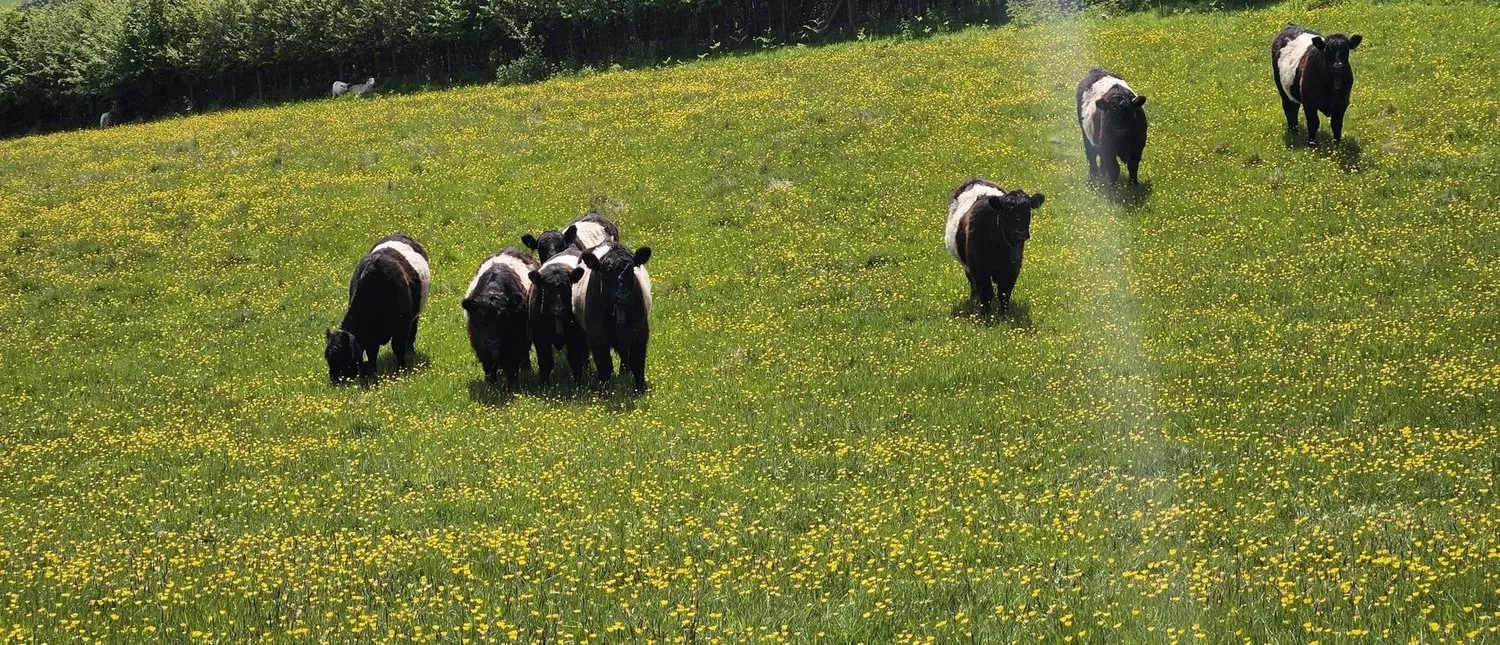
"They want to turn our farms into theme parks." This sentiment, expressed by a Welsh hill farmer at a 2024 NFU meeting, captures the fear many in agriculture feel about the rewilding movement. On the other side, conservationists argue that conventional farming has driven nature into crisis, with farmland bird populations down 56% since 1970 according to DEFRA data.
The truth, as always, is more nuanced. Across Britain, pioneering farmers are proving that nature and agriculture can thrive together, while others struggle with policies they see as threatening their way of life. This article examines both perspectives with evidence, economics, and farmer voices.
The Central Debate
At its core, the rewilding vs farming debate asks a fundamental question: how should Britain use its land? The UK has approximately 18 million hectares of utilised agricultural land, representing around 73% of our total land area. Yet we import nearly half our food, our soils are degrading, and our wildlife is disappearing faster than almost anywhere in Europe.
Rewilding advocates argue that some of this land, particularly marginal upland areas where farming is only viable through subsidies, should be returned to nature. Critics counter that this threatens food security, rural employment, and centuries of farming culture.
"It's about farming smarter, not stopping farming. We've increased biodiversity without reducing food production."
Jake Fiennes, Director of Conservation, Holkham Estate and author of 'Land Healer'
The Case for Integration
1. Failing Farm Economics
British farming faces significant economic pressures. While average farm business income in England rose to £96,100 in 2022/23 according to DEFRA, this figure masks huge variation. Grazing livestock farms in Less Favoured Areas often struggle, with subsidies representing over 50% of total income for many upland farms.
With Basic Payment Scheme subsidies being phased out by 2027 and replaced by Environmental Land Management (ELM) schemes, farmers face a choice: intensify production, diversify into environmental services, or exit the industry. Rewilding offers one pathway for diversification.
2. Ecosystem Services Have Economic Value
Natural habitats provide services worth billions annually. A 2021 report by the Green Finance Institute estimated that UK natural capital is worth £1.8 trillion. Healthy ecosystems prevent flooding (saving an estimated £1.5 billion annually), purify water, sequester carbon, and support pollinators essential for crop production.
In England, farmers who restore wetlands, plant hedgerows, and create wildflower margins can Farmers who restore wetlands, plant hedgerows, and create wildflower margins can now receive payments through Countryside Stewardship and the new Sustainable Farming Incentive. Some are accessing private markets for carbon credits and biodiversity net gain credits.
Case Study: Knepp Estate, West Sussex
The Knepp Estate has become Britain's most famous rewilding success story, and it began with farming failure. By 2000, Charlie Burrell and Isabella Tree were losing money despite farming the 3,500-acre estate intensively. The heavy clay soils required expensive inputs but produced disappointing yields.
Their decision to stop farming and let nature take over was initially met with ridicule from neighbouring farmers. Twenty years later, Knepp hosts turtle doves, nightingales, and purple emperor butterflies, species that have disappeared from much of southern England.
Knepp's Economic Model
- •Wild-range meat: Premium pasture-fed beef, pork, and venison sold directly and to restaurants
- •Glamping and safaris: Eco-tourism generates significant accommodation revenue
- •Environmental payments: Countryside Stewardship and carbon credits
- •Events and education: Weddings, courses, and school visits
Isabella Tree reports that Knepp now employs more people and generates more profit than during its intensive farming years.
Critics note that Knepp's model requires significant capital, a beautiful estate, and proximity to wealthy London consumers. Not every farm can replicate this success. But Knepp demonstrates that alternatives to conventional farming exist.
Farmer Concerns: Voices from the Land
1. Food Security
With the UK already importing nearly half its food, farmers argue that rewilding productive land is irresponsible. "Every acre we take out of production is food we have to import from countries with lower environmental standards," argues Minette Batters, former NFU President.
The counter-argument is that much rewilding focuses on marginal land that produces little food anyway. Upland sheep farms, for example, contribute less than 1% of UK meat production while receiving disproportionate subsidies.
2. Rural Employment and Communities
"Farming isn't just about economics. It's about identity, heritage, and a way of life passed down through generations. We are custodians of the land and our communities."
Sentiment expressed by Welsh hill farmers at NFU Cymru meetings
This cultural dimension is often overlooked in economic analyses. Farming shapes rural communities, from the Welsh language heartlands to Scottish crofting traditions. When farms close, schools, pubs, and shops often follow.
3. Unintended Consequences
Farmers point to practical problems with rewilding. Abandoned farmland can become dominated by invasive species like bracken or ragwort. Reintroduced beavers flood agricultural land. Deer populations explode without predators, damaging crops and causing traffic accidents.
The Economic Reality
Hard numbers reveal the complexity of this debate. According to DEFRA data:
Conventional Farming (2023/24)
- • Average farm business income varies hugely by type
- • Subsidies represent 50%+ of income for upland farms
- • Grazing livestock farms in LFAs: often net loss without support
- • Average UK farmer age: 59 years
Nature-Based Enterprises
- • SFI payments: £20 to £732/hectare depending on action
- • Carbon credits: £25 to £50/tonne (volatile market)
- • Biodiversity credits: emerging market, prices vary
- • Ecotourism: location-dependent potential
The economic case for rewilding is strongest on unproductive marginal land where farming already requires heavy subsidy. It's weakest on productive lowland farms where conventional agriculture remains viable.
UK Case Studies: Beyond Knepp
Holkham Estate, Norfolk
Unlike Knepp, the 25,000-acre Holkham Estate proves that nature recovery and productive agriculture can coexist. Director of Conservation Jake Fiennes, author of 'Land Healer', has restored wetlands, created wildlife corridors, and reintroduced water voles, while the estate continues large-scale arable farming.
Holkham manages 9,600 acres of National Nature Reserve alongside commercial farming, demonstrating that working farms can contribute to landscape-scale conservation.
Wild Ken Hill, Norfolk
Since 2019, this Norfolk estate has combined rewilding with continued farming. The project uses conservation grazing with Konik ponies and Exmoor ponies, sells wild-range meat, and hosts the BBC Springwatch programme. Wild Ken Hill demonstrates that even recently converted farmland can rapidly recover biodiversity while generating income.
The Grange Project, Wales
Closer to home, the Grange Project demonstrates small-scale rewilding on a Welsh hillside. The project combines nature restoration with community education, regenerative grazing, and sustainable tourism through an off-grid cabin stay.
"We're not anti-farming," explains the project. "We work with neighbouring farmers, share knowledge, and show that small-scale rewilding can benefit the whole community."
Finding Middle Ground
The most promising solutions emerge when farmers and conservationists collaborate rather than conflict. Several approaches are gaining traction:
1. Regenerative Agriculture
Regenerative farming uses practices like no-till cultivation, cover cropping, and diverse rotations to rebuild soil health while producing food. Farms like Groundswell in Hertfordshire demonstrate that yields can be maintained while reducing inputs and restoring soil carbon.
2. Agroforestry
Integrating trees with farming creates wildlife habitat, sequesters carbon, and can improve livestock welfare through shade and shelter. Stephen Briggs's Whitehall Farm in Cambridgeshire combines apple orchards with arable crops, creating a productive and wildlife-rich landscape.
3. Landscape-Scale Collaboration
Projects like Wendling Beck in Norfolk bring six neighbouring landowners together across 2,000 acres to create connected wildlife corridors. The project combines biodiversity net gain, carbon credits, and regenerative agriculture to provide stable returns while delivering remarkable nature recovery.
"Half of the country's farmland needs to be transformed into woodland and natural habitat in order to combat the climate crisis and declining wildlife."
Professor Sir Ian Boyd, Former Chief Scientific Adviser to DEFRA (2019)
The Future of UK Farming and Nature
In England, the transition from Basic Payment Scheme to Environmental Land Management represents the biggest change to UK agricultural policy in 50 years. By 2027, farmers will only receive public money for public goods, primarily environmental outcomes.
This policy shift creates both opportunity and risk. Farmers who embrace change can access new income streams. Those who cannot or will not adapt face an uncertain future. The average age of UK farmers is 59, and many are approaching retirement without successors.
What's needed is:
- Better support for transition: Farmers need advice, training, and financial bridging to shift practices
- Realistic economics: Environmental payments must genuinely compete with food production income
- Local solutions: One-size-fits-all policies fail; what works in Norfolk differs from Snowdonia
- Respect for farming culture: Conservationists must acknowledge the valid concerns of farming communities
- Long-term thinking: Both sides need to move beyond short-term conflicts to envision sustainable rural landscapes
The Case for Land Sparing
Some conservationists argue that the best approach is "land sparing": protecting some areas entirely for nature while farming more intensively elsewhere. This contrasts with "land sharing" approaches that try to integrate wildlife across working farmland.
The land sparing argument holds that half-measures fail both nature and food production. Species requiring large territories, minimal disturbance, or specific habitat conditions cannot survive on farms, however wildlife-friendly. Meanwhile, extensive low-yield farming across large areas may produce less food per unit of land than intensive farming on a smaller area, requiring more total land under cultivation globally.
Under this model, marginal farmland, particularly the uplands where farming is only viable through subsidies, could be given entirely back to nature. Productive lowland farms would continue intensive production, perhaps with wildlife corridors and margins, but not attempting to be nature reserves themselves. Both approaches have merit, and the optimal balance likely varies by landscape.
Conclusion: Beyond the Binary
The rewilding vs farming debate often generates more heat than light. The reality is that Britain needs both productive agriculture and thriving nature. The question is not whether to choose one over the other, but how to integrate them across our landscapes.
Some land, particularly unproductive uplands and degraded areas, may be better suited to rewilding. Productive farmland should remain in agriculture, but with practices that support rather than undermine nature. And everywhere, farmers deserve respect, fair payment, and genuine partnership in shaping rural futures.
The farmers who are finding success, from Knepp to the Grange Project, share a common trait: they rejected the false binary and found creative ways to produce food, restore nature, and build sustainable rural businesses. Their examples offer hope that the conflict can become collaboration.
Experience Farming and Rewilding Together
Visit the Grange Project to see how a small Welsh farm balances food production, nature restoration, and community education. Stay in our off-grid cabin and explore the landscape where rewilding and farming coexist.
Further Resources
Watch
Knepp Rewilded: A Short Film
A 15-minute film about the trailblazing Knepp rewilding project and wildlife successes
Lynbreck Croft: Regenerative Farm in Scotland
How a Scottish croft transformed degraded land through regenerative practices
Frequently Asked Questions
Does rewilding mean the end of farming?
No. Most rewilding advocates support a 'land-sparing' approach where intensive farming continues on productive land while marginal land is restored for nature. Many farms are integrating rewilding practices alongside food production through agroforestry, silvo-pasture, and regenerative grazing.
Can farmers make money from rewilding?
Yes. UK farmers can access Environmental Land Management (ELM) payments, Countryside Stewardship grants, and private biodiversity credits. The Knepp Estate generates over £1 million annually from nature-based enterprises. Carbon credits, ecotourism, and premium 'wild' meat brands offer additional income streams.
What happens to farm jobs if land is rewilded?
This is contested. Critics argue rewilding reduces farm employment. However, nature-based enterprises often create different jobs: ecotourism guides, conservation managers, woodland workers, and hospitality staff. The Knepp Estate employs more people now than when it was a conventional farm.
Is rewilded land still productive?
Rewilded land produces different outputs: carbon sequestration, flood prevention, water purification, pollinator services, and biodiversity. Some rewilding projects also produce food through conservation grazing, generating premium 'wild-range' meat while restoring ecosystems.
Do farmers support rewilding?
Opinion is divided. Some farmers embrace regenerative practices and see rewilding as an opportunity. Others fear losing productive land, cultural heritage, and farming identity. Location matters: upland hill farmers often feel more threatened than lowland arable farmers.
Continue Reading
Stay Updated on Rewilding
Join our newsletter for the latest rewilding news, guides, and updates from The Grange Project.