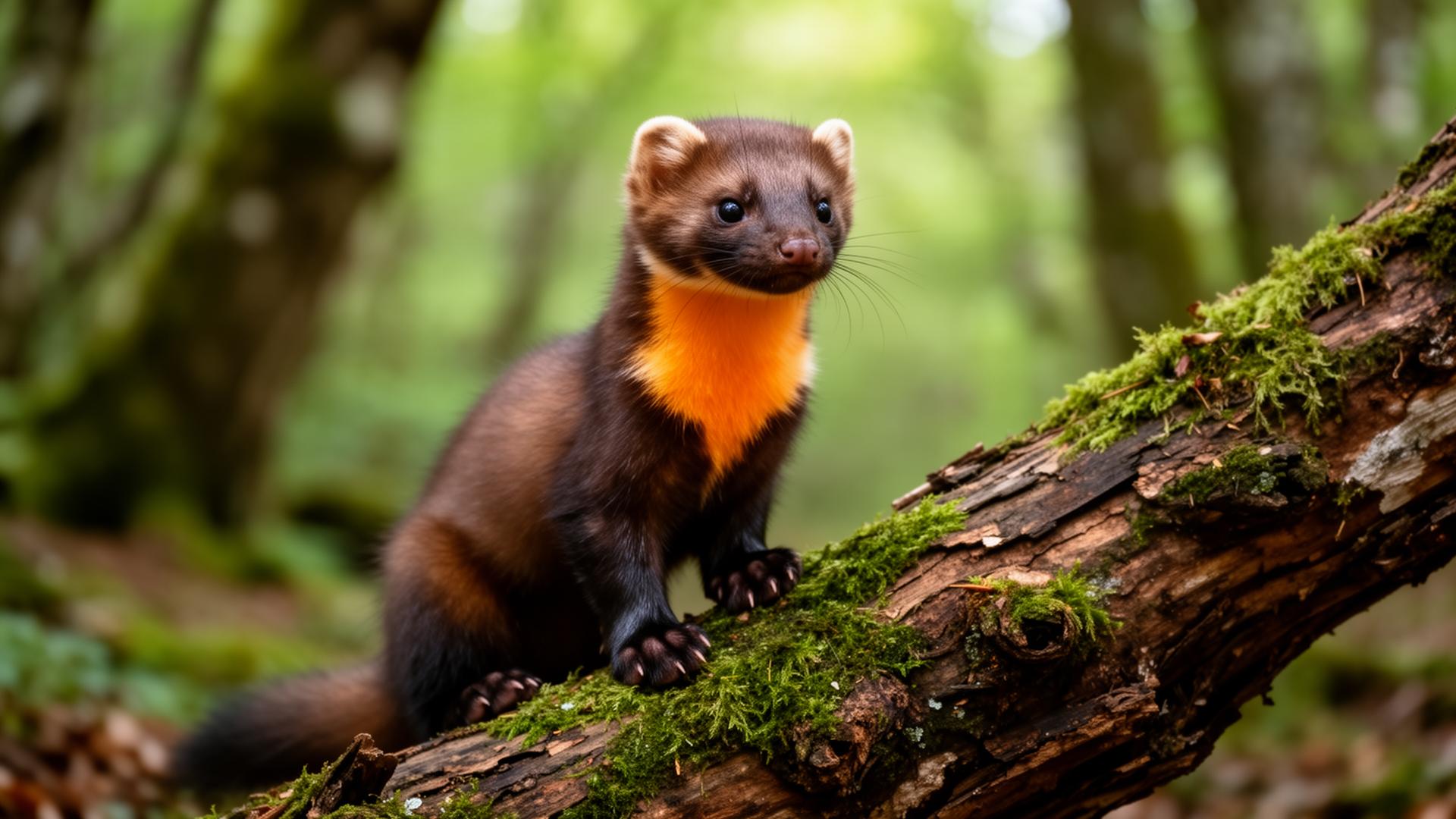
The pine marten is one of Britain's most beautiful and elusive native predators. With its chocolate-brown fur, creamy bib, and bushy tail, it's a creature of the treetops and the twilight, rarely seen but increasingly present in our woodlands. And it's bringing an unexpected gift: helping red squirrels return.
After centuries of persecution reduced pine martens to a last stronghold in the Scottish Highlands, they're now recovering and spreading, aided by reintroduction projects and improved woodland habitat.
Rise and Fall (and Rise Again)
Pine martens (Martes martes) were once common throughout Britain's woodlands. But from the 18th century onwards, they were relentlessly persecuted by gamekeepers protecting pheasants and by the fur trade. Combined with massive deforestation, this drove them to near-extinction in England and Wales by the early 20th century.
Only in the remote Highlands did they survive, in steep, rocky terrain where they couldn't easily be trapped. Legal protection came in 1988, and slowly, populations began to recover.
Pine Marten Recovery Timeline
Heavy persecution across Britain
Considered extinct in England and Wales
Full legal protection under Wildlife & Countryside Act
Translocations to mid-Wales
Reintroduction to Forest of Dean
Populations expanding across Britain
Pine Marten Ecology
Pine martens are members of the mustelid family, related to otters, badgers, and stoats. They're superbly adapted for life in the trees:
Tree-Top Athletes
Semi-retractable claws and flexible ankle joints let pine martens climb and descend trees head-first with astonishing agility.
Territory
Males hold territories of 10-25 km², which may overlap with several female territories of around 5-15 km².
Diet
Opportunistic feeders eating small mammals, birds, eggs, insects, and fruits. Their diet shifts seasonally with availability.
Denning
Pine martens den in tree holes, old squirrel dreys, rock crevices, and even buildings. They may use den boxes provided by conservationists.
The Squirrel Connection
One of the most exciting discoveries about pine marten recovery is their effect on squirrel populations. Where martens return, grey squirrel numbers decline and red squirrels recover.
This appears to happen because:
- Grey squirrels are easier prey: Greys spend more time foraging on the ground, where martens can catch them.
- Red squirrels are more agile: Having evolved alongside martens, reds are lighter and can escape to thinner branches.
- Behaviour changes: Greys become more cautious, reducing their foraging efficiency and breeding success.
"Pine martens are doing what nothing else has managed, they're tipping the balance back in favour of our native red squirrel."
In Ireland, where pine martens never went extinct, areas with strong marten populations consistently show red squirrel recovery. The same pattern is emerging in Scotland and early results from English reintroductions are promising.
Reintroduction Projects
Several projects are actively restoring pine martens to their former range:
- Forest of Dean (2019-present): Gloucestershire Wildlife Trust released 35 martens, and breeding has been confirmed.
- Mid-Wales (2015-2017): Vincent Wildlife Trust translocated 51 martens from Scotland, now breeding successfully.
- Natural spread: Martens are expanding southward from Scotland into northern England without human assistance.
These projects carefully select individuals from healthy Scottish populations, radio-collar them for monitoring, and provide supplementary food during establishment.
Helping Martens Recover
Several factors are supporting pine marten recovery:
- Woodland expansion: More woodland provides more habitat and connectivity.
- Reduced persecution: Most gamekeepers now recognise martens' protected status.
- Den boxes: Artificial dens help martens in areas lacking tree holes.
- Public support: Pine martens are charismatic animals that people want to protect.
You can support pine martens by supporting woodland conservation charities, reporting sightings to local wildlife trusts, and if you have woodland, consider installing den boxes.
Spotting Pine Martens
Where to Look
- •Scottish Highlands: The best chances, especially at wildlife hides with feeding stations.
- •Forest of Dean: Growing population, occasional sightings on forest trails.
- •Mid-Wales: Expanding population in the Cambrian Mountains.
- •Northern England: Increasing sightings in Cumbria and Northumberland.
Pine martens are largely nocturnal and shy, so sightings are rare. Your best bet is a dedicated wildlife hide with overnight accommodation and feeding stations, several of which operate in the Scottish Highlands.
Explore Welsh Wildlife
Stay at the Grange Project in Monmouthshire, close to the Forest of Dean pine marten population and Welsh woodland habitats.
Further Resources
Watch
Pine Marten Recovery Project (Forest of Dean)
A short film about the Forest of Dean pine marten recovery project.
Pine Martens with Dr Steve Carter | Vincent Wildlife Trust
The surprising relationship between martens and squirrels.
Frequently Asked Questions
Are pine martens coming back to England?
Yes! Pine martens are recovering naturally in northern England and have been successfully reintroduced to the Forest of Dean and mid-Wales through translocation projects. Populations are slowly expanding as woodland habitat improves. By 2026, sightings are becoming more frequent across England and Wales.
Do pine martens help red squirrels?
Remarkably, yes. Research shows that where pine martens return, grey squirrel numbers decline while red squirrels recover. Pine martens find grey squirrels easier to catch because greys spend more time on the ground and are less agile. Red squirrels, evolved alongside martens, are better at escaping.
What do pine martens eat?
Pine martens are opportunistic omnivores. Their diet includes small mammals (voles, mice), birds and eggs, insects, berries, and carrion. In autumn, they love fruits and berries, especially rowan and bilberry. They're surprisingly fond of jam and peanut butter, which is used in research monitoring!
Where can I see pine martens in the UK?
The Scottish Highlands have the strongest populations. In England, the Forest of Dean now has an established population from reintroduction. North-west England has naturally expanding populations. Wales has growing numbers from translocations. Sightings remain rare as martens are elusive and largely nocturnal.
Are pine martens dangerous?
Pine martens are not dangerous to humans. They're shy, largely nocturnal animals that avoid contact with people. While they have sharp teeth and can bite if cornered, they'll always prefer to flee. They may occasionally take poultry if coops aren't secure, but pose no threat to pets or children.
Continue Reading
Stay Updated on Rewilding
Join our newsletter for the latest rewilding news, guides, and updates from The Grange Project.