Wildlife Weekends UK
Your seasonal guide to Britain's most spectacular wildlife experiences, from dawn chorus to deer rut.
Every season offers unique wildlife encounters across Britain's rewilding sites. From the ethereal dawn chorus of spring to the dramatic deer rut of autumn, nature's calendar is packed with unforgettable experiences. Plan your escape with our seasonal guide to the UK's best wildlife weekends.
Spring
March to May
Wildlife Highlights
Dawn Chorus Walks
Experience the incredible soundscape of woodland birds at first light. Best between 4am and 6am in late April.
Bluebells & Wildflowers
Ancient woodlands carpeted in blue. Peak viewing mid-April to early May.
Beaver Activity
Watch beavers emerge after winter, building and foraging as territories expand.
Lambing Season
Rare breed lambs at rewilding farms, often with heritage cattle calves too.
Migrant Bird Arrivals
Swallows, cuckoos, and warblers return. White storks nesting at Knepp.
Top Destinations
Knepp Estate, Sussex
White stork nesting, nightingales
RSPB Minsmere, Suffolk
Bittern booming, avocet colonies
Wild Ken Hill, Norfolk
Dawn chorus events, beaver watching
Summer
June to August
Wildlife Highlights
Butterfly Transects
Peak butterfly season. Join citizen science surveys or simply enjoy the spectacle.
Wildflower Meadows
Species-rich grasslands at their most colourful. Yellow rattle, orchids, and ox-eye daisies.
Nocturnal Wildlife
Badger watching, moth trapping, and bat walks on warm summer evenings.
Kayaking & Wild Swimming
Explore rewilded rivers and wetlands from the water.
Osprey Fishing
Watch ospreys dive for fish at reintroduction sites across the UK.
Top Destinations
the Grange Project, Wales
Meadow walks, butterfly transects
Cambrian Wildwood, Wales
Beaver wetlands, wildflowers
Loch Arkaig, Scotland
Osprey nest camera site
Autumn
September to November
Wildlife Highlights
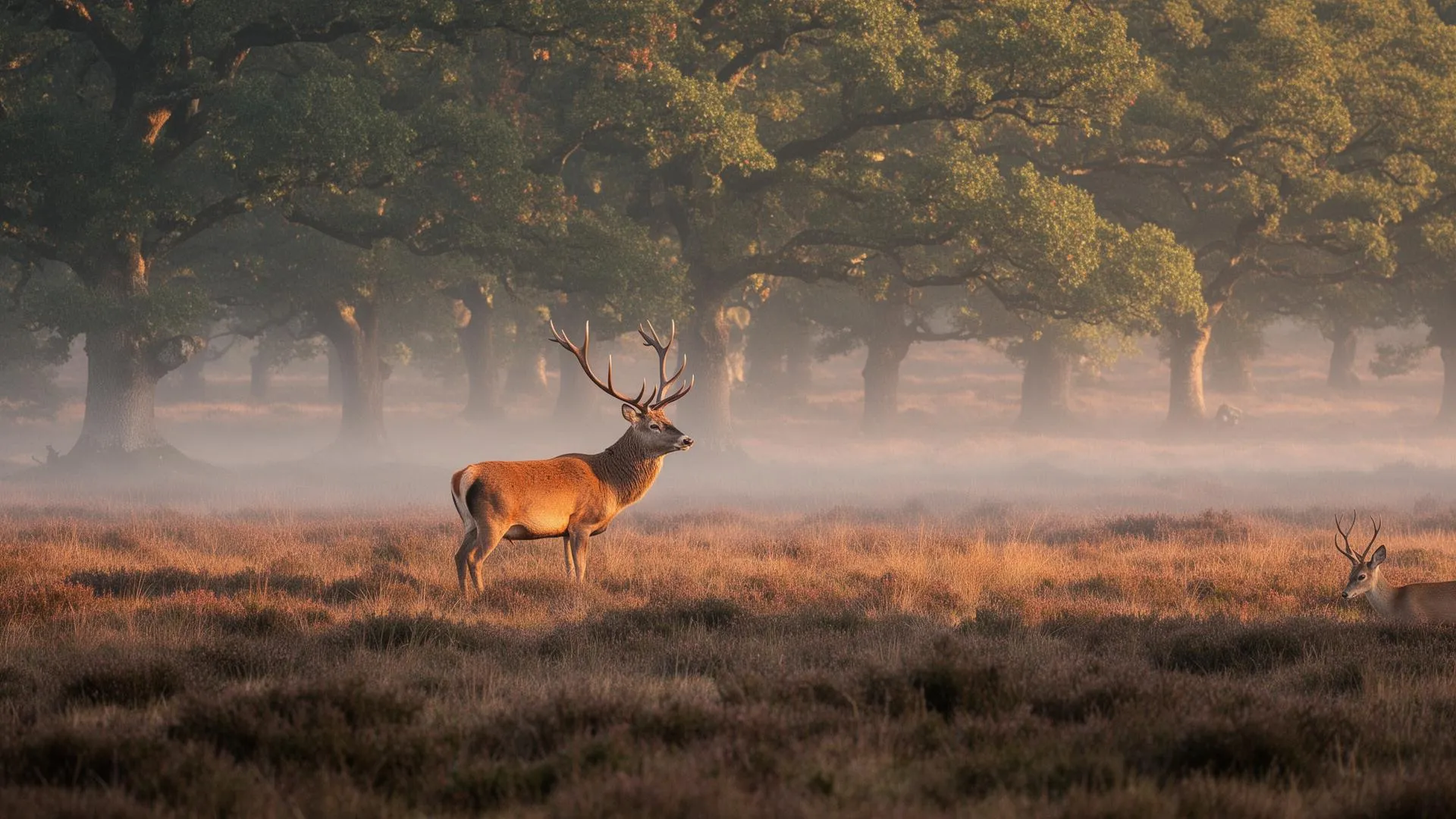
Red Deer Rut
The dramatic spectacle of stags bellowing and clashing antlers. Best in early October.
Salmon Run
Watch Atlantic salmon leap upstream to spawn in rewilded rivers.
Starling Murmurations
Massive flocks create swirling patterns at dusk. Peak November to early February.
Fungi Forays
Expert-led walks through ancient woodlands to identify wild mushrooms.
Bird Migration
Waders and wildfowl arrive from the Arctic. Geese spectacles at wetland reserves.
Top Destinations
Cairngorms, Scotland
Red deer rut, golden eagles
RSPB Snettisham, Norfolk
Knot spectacle, pink-footed geese
Knepp Estate, Sussex
Fallow deer rut, fungal diversity
Winter
December to February
Wildlife Highlights
Winter Wildlife Tracking
Snow and frost reveal animal tracks. Perfect for learning to read the landscape.
Wildfowl Spectacles
Thousands of geese, swans, and ducks gather at wetland reserves.
Woodland Conservation
Join volunteer workdays for coppicing, hedge-laying, and tree planting.
Dark Sky Stargazing
Clear winter nights at remote rewilding sites offer incredible astronomy.
Short-eared Owls
Daytime hunting owls quarter rough grassland and coastal marshes.
Top Destinations
WWT Slimbridge, Gloucestershire
Bewick's swans, crane flock
RSPB Geltsdale, Cumbria
Hen harrier roost, red squirrels
Islay, Scotland
Barnacle and white-fronted geese
Planning Your Wildlife Weekend
Book Wildlife Guides
Local experts know where to find elusive species. Worth the investment for deer rut or bird spectacles.
Check Tides & Moon
Coastal wildlife watching depends on tides. Full moons affect animal behaviour.
Arrive Early
Dawn and dusk are peak wildlife times. Stay nearby to maximise these golden hours.
Pack Layers
British weather changes fast. Waterproofs and warm layers are essential year-round.
Bring Binoculars
Even a basic pair transforms wildlife watching. 8x42 is ideal for most situations.
Respect Wildlife
Keep distance, stay quiet, and never approach nests or young animals.
Frequently Asked Questions
What is the best time of year for wildlife in the UK?
Every season offers unique experiences. Spring brings the dawn chorus and migrant birds. Summer is peak butterfly and wildflower season. Autumn offers the red deer rut and starling murmurations. Winter brings wildfowl spectacles and wildlife tracking in snow.
Where can I see deer rutting in the UK?
The red deer rut peaks in early October. Top locations include Richmond Park in London, the Cairngorms in Scotland, Exmoor National Park, and the Lake District. Fallow deer rut later in October at sites like Knepp Estate and Petworth Park.
What is a dawn chorus walk?
A dawn chorus walk is an early morning experience (typically 4am to 6am in late April) to hear woodland birds singing at their peak. Many rewilding projects and nature reserves offer guided walks where experts identify species by song.
Can I see beavers in the wild in the UK?
Yes, beavers can now be seen at multiple locations including the River Otter in Devon, Knapdale in Scotland, and various rewilding projects. Dusk is the best time for beaver watching. Guided experiences are available at many sites.
What should I bring on a wildlife weekend?
Essential items include binoculars, waterproof boots, layers for changeable weather, a camera with telephoto lens if you have one, a field guide or wildlife app, and patience. Many sites provide hides and viewing platforms.
Stay at the Grange Project
Experience wildlife weekends from our off-grid cabins in Monmouthshire. Wake to birdsong, spot deer at dusk, and fall asleep to owl calls. 80 acres of rewilding landscape on your doorstep.
Check Availability
Check Availability
Sun £100 · Mon to Thu £110 · Fri & Sat £130
per cabin per night · sleeps 2 · no cleaning fee
2-night minimum, so from £210
Newsletter
Sign up to receive our newsletter in which we'll keep you abreast of our current projects, what's happening on the land and how you can get involved. (We promise not to spam you!)